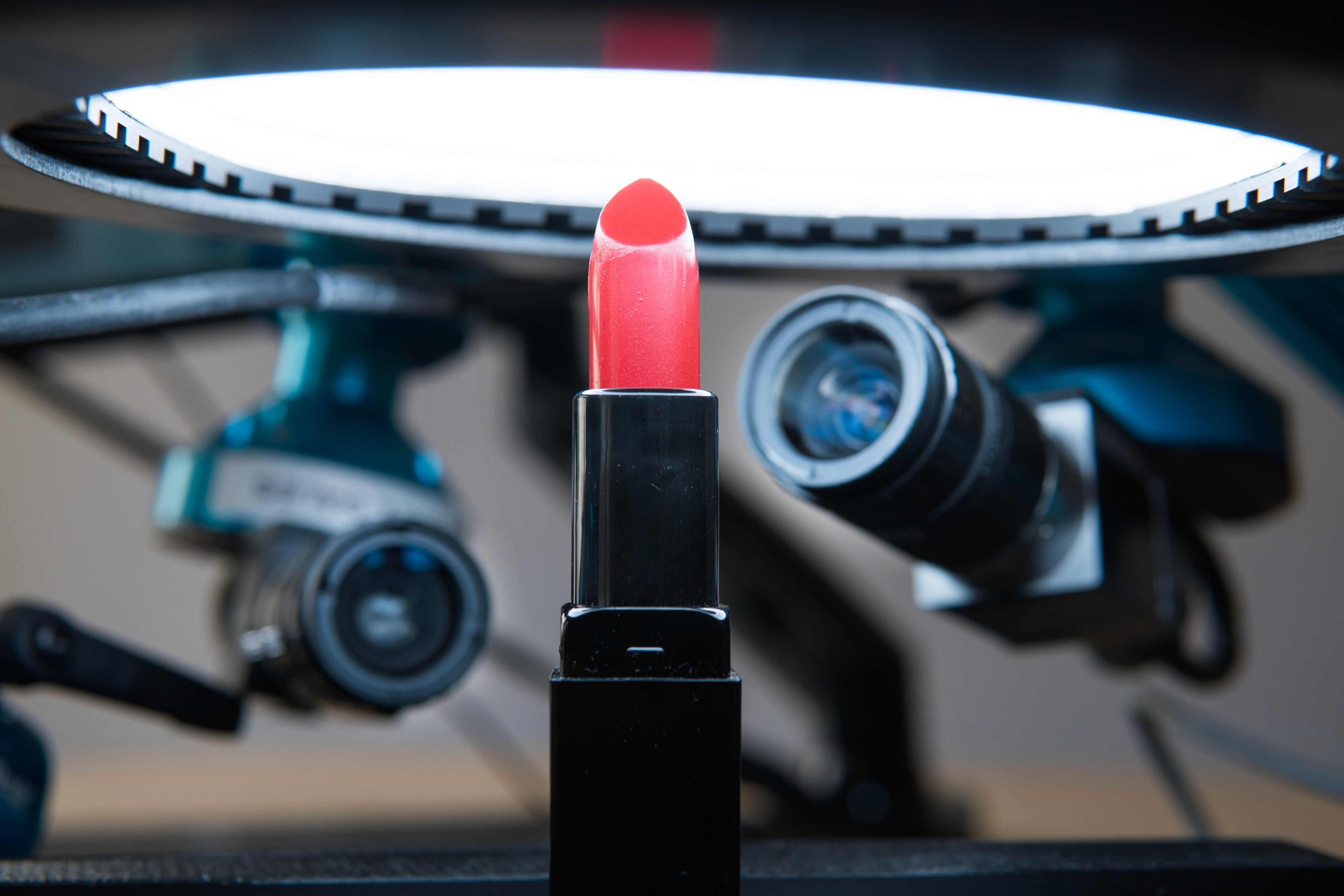
How to secure cosmetic quality control through automation
Published on
by
Scortex team
Cosmetic quality control: an underestimated industrial challenge
In the cosmetics industry, a visual defect is never minor. A micro-scratch on a metal cap, dust on lipstick, or a slightly offset pattern on a bottle can be enough to trigger a customer complaint or damage the image of a premium brand.
The cosmetic quality control therefore relies on a specific requirement: detecting often subtle aspect defects on shiny, decorated, or complex geometry parts. At industrial speeds, this task becomes extremely demanding for production teams.
In many factories, inspection remains mostly manual. Operators visually observe each part to identify anomalies. This work requires constant concentration, leading to visual fatigue and decreased vigilance over time.
In this context, automating visual inspection becomes a strategic lever. Not to replace quality teams, but to support them: reducing strain, stabilizing inspection criteria, and improving quality performance in cosmetics.
Why manual visual control is reaching its limits
Manual inspection remains essential in many industrial environments. Operators possess irreplaceable expertise to interpret certain defects or arbitrate borderline cases.
But several factors make this approach difficult to sustain alone in modern cosmetics industries.
1. Visual fatigue
Inspecting shiny, metallic, or varnished surfaces is particularly demanding. Reflections, light variability, and material texture make certain defects difficult to perceive. Even for an experienced operator, detecting micro-defects becomes more uncertain over time.
2. Subjectivity of criteria
In cosmetics, many defects are aesthetic. Their criticality depends on factors such as:
the position on the part,
the size of the defect,
the proximity to a logo,
the premium positioning of the product.
The same defect can be judged acceptable or critical depending on the context. This subjectivity complicates the harmonization of criteria between quality, production, and marketing teams.
3. Batch variability
Cosmetics lines often produce several close references: different colors, multiple decorations, limited editions.
Reconfiguring a traditional control system for each batch change quickly becomes heavy and time-consuming.
4. The risk of customer complaints
For manufacturers, the main challenge is not just the scrap rate. It is customer complaints, which can lead to product returns, financial losses, and damage to brand image.
Automating cosmetic quality control: a logical evolution
Faced with these challenges, automating visual inspection is progressively establishing itself on production lines.
But not all technologies meet the same needs.
Traditional machine vision: limits on aspect defects
Classic vision systems operate based on programmed rules. For example:
detecting a hole of a certain size,
checking the presence of an element,
measuring a precise dimension.
These approaches work very well for simple and repeatable controls. On the other hand, they become less effective when visual variability is high, such as on shiny or decorated surfaces.
The AI approach: learning the compliant part
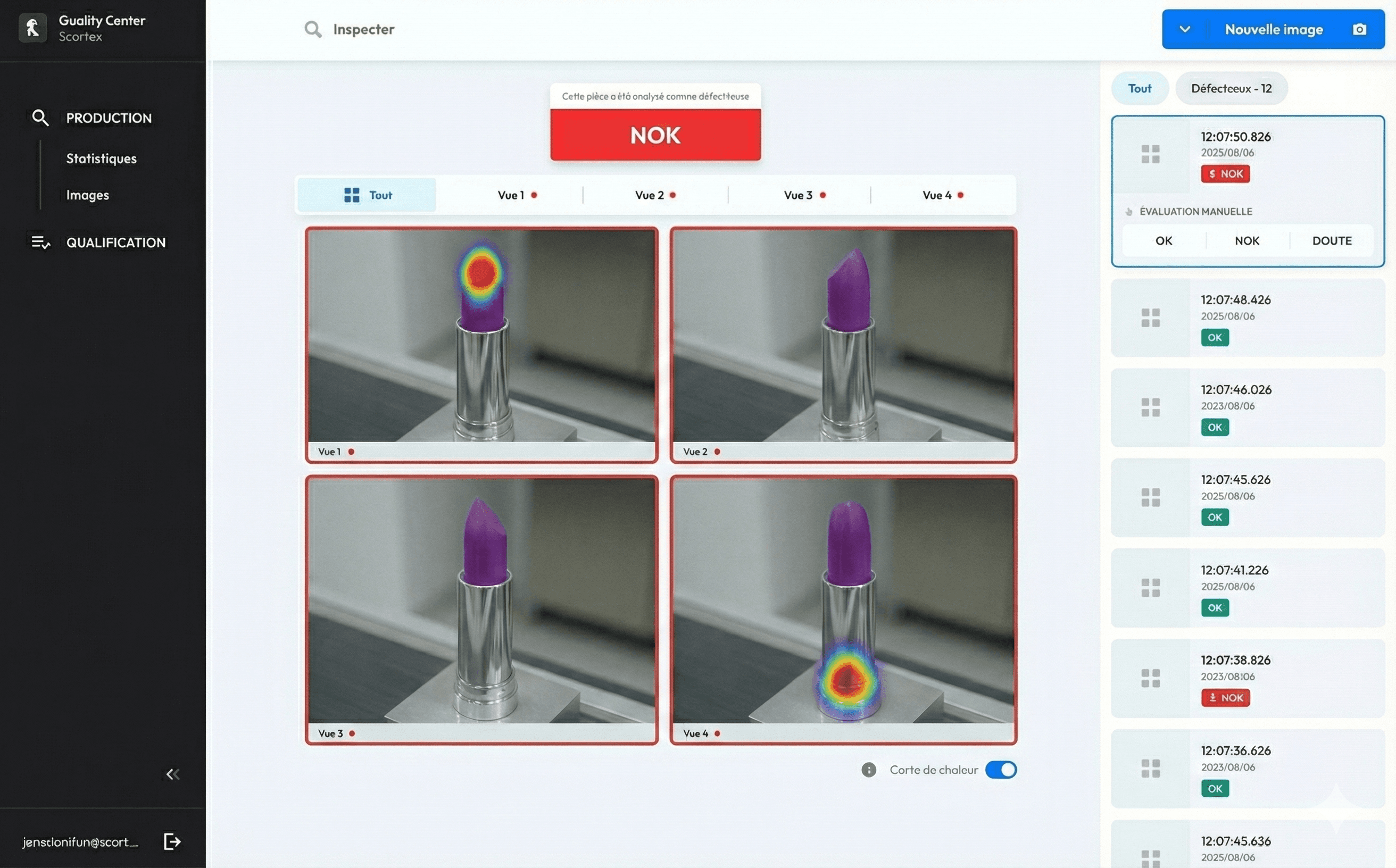
Systems based on artificial intelligence like Spark, a solution developed by Scortex, adopt a different logic.
Rather than programming each defect, they learn to recognize a compliant part from examples. Any variation from this model is then detected as an anomaly.
This approach offers several advantages:
detection of unexpected defects,
adaptation to natural production variations,
reduction in setup work.
It is particularly relevant for cosmetic parts where defects can be multiple and difficult to formalize.
Defect detection or anomaly detection: a strategic difference
In the industry, two approaches are generally distinguished.
Defect detection
The machine is trained to recognize a list of known defects: scratches, cracks, dust.
Limit: every possible type of defect must be anticipated and documented.
Anomaly detection
The AI learns what a compliant part is and flags any deviation.
This approach allows for the detection of:
known defects,
new defects,
production drifts.
In real industrial environments, where processes evolve regularly (new suppliers, new materials, new machine settings), this adaptability is particularly valuable.
Automation does not replace operators
An essential point in setting up an automated system is complementarity with quality teams.
In some cases, automation acts as an intelligent pre-sorting:
the system identifies suspicious parts,
the operator analyzes ambiguous cases,
quality teams adjust tolerance thresholds.
This organization allows human expertise to be focused on high-value decisions.
AI provides constant vigilance, while operators maintain control over quality criteria and industrial arbitrations.
The most frequent aspect defects in cosmetics
Cosmetic products present a wide variety of visual defects.
Among the most common:
Surface defects
micro-scratches
impacts
gloss defects
color variations
Process-related defects
dust
inclusions
bubbles
metallization defects
Assembly or decoration defects
mispositioned label
offset pattern
incorrect gluing
In premium environments, even a minimal defect can be judged critical if it alters the appearance of the product.
Inspection data: a lever for continuous improvement
Automating quality control is not just for sorting parts.
Modern systems also generate a large amount of actionable data:
images of inspected parts,
location of anomalies,
defect history,
production statistics.
This information makes it possible to identify:
a process drift,
a supplier issue,
unstable machine settings.
Visual inspection then becomes a true industrial analysis tool, and no longer just a sorting station.
Industrial example: lipstick inspection
In some cosmetic lines, a very specific defect can become critical.
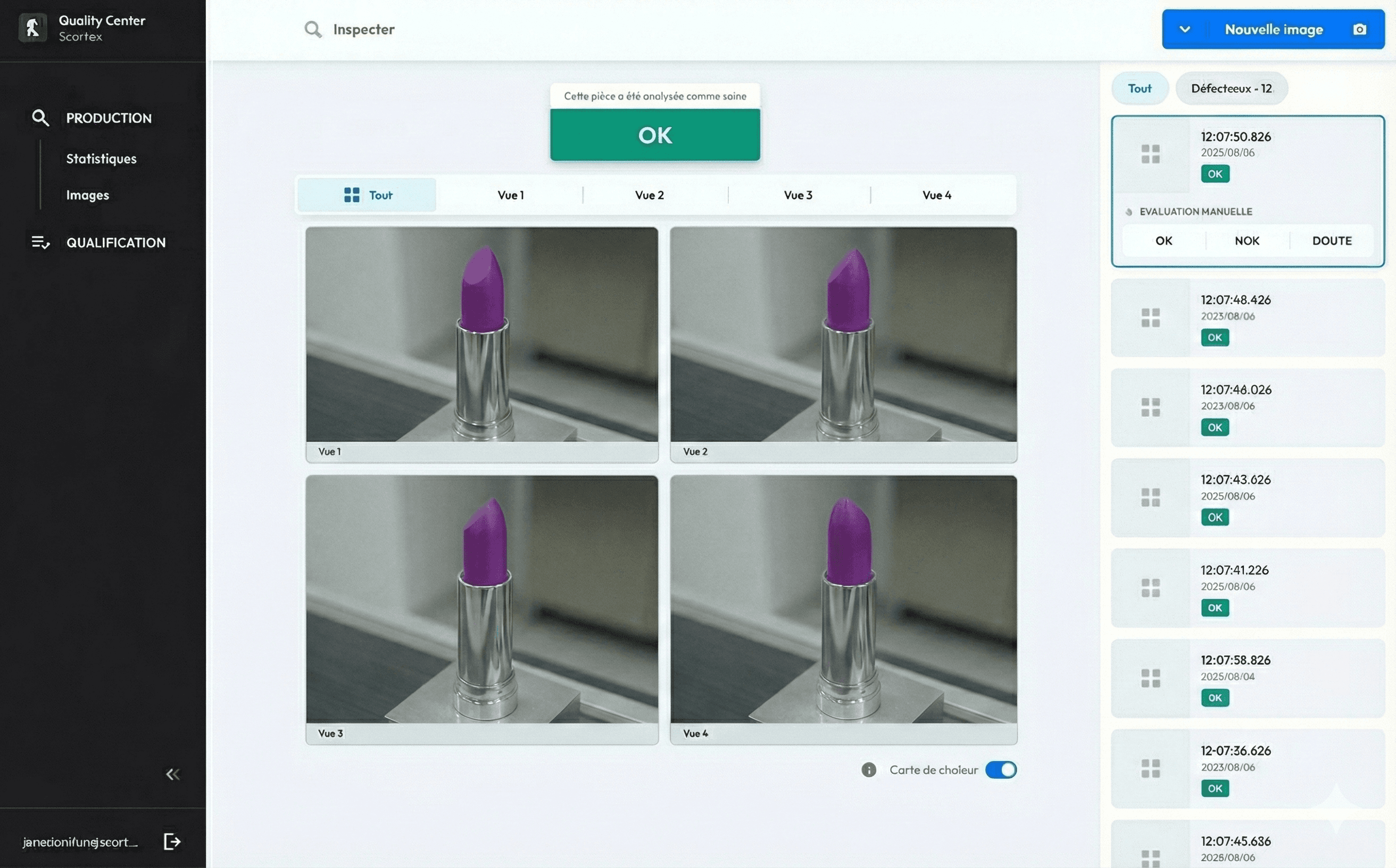
For example, a slight matte defect on the bevel of a lipstick can give the impression that the product has already been used. For premium brands, this type of anomaly is unacceptable.
An automated inspection system then makes it possible to:
make this defect visible in an objective manner,
harmonize criteria between quality and marketing teams,
secure production on large runs.
Automating cosmetic quality control: best practices
The success of an automation project often relies on a few key principles.
Clarify quality criteria
Specifications must be aligned between:
quality,
production,
marketing.
Test on real samples
Testing on good and defective parts allows to verify technical feasibility.
Train an internal referent
An operator or technician must be trained to manage the system on a daily basis.
Gradually adjust thresholds
The right balance between false positives and escapes is generally achieved after several iterations.
Towards a new maturity of quality control
Automation does not just transform how parts are checked. It also changes how industrial quality is analyzed.
By capitalising on inspection data and objectifying visual criteria, manufacturers can:
better understand their recurring defects,
reduce production drift,
structure their continuous improvement.
Cosmetic quality control then becomes a strategic lever to secure production and protect brand image.
Understand manual quality control? Download the free comparative guide:
FAQ – cosmetic quality control
Why is cosmetic quality control more complex than in other industries?
Cosmetic products often feature shiny, decorated, or metallic surfaces. Defects are mostly aesthetic and can be difficult to detect at industrial speeds.
What is the difference between defect detection and anomaly detection?
Defect detection identifies known defects. Anomaly detection learns what a compliant part is and signals any deviation, including unforeseen defects.
Does automation replace manual quality control?
No. Automated systems can serve as pre-sorting. Operators maintain a key role in analyzing ambiguous cases and adjusting quality criteria.
What defects can a visual inspection system detect in cosmetics?
The most common are scratches, dust, bubbles, surface defects, labeling or decoration defects, as well as certain shade or gloss variations.
Here are other articles that might interest you:
Automated quality control by AI: luxury industry
Automated quality control by AI: cosmetics industry
Quality control automation at Toly thanks to Spark technology from Scortex
How to secure cosmetic quality control through automation
Published on
by
Scortex team
Cosmetic quality control: an underestimated industrial challenge
In the cosmetics industry, a visual defect is never minor. A micro-scratch on a metal cap, dust on lipstick, or a slightly offset pattern on a bottle can be enough to trigger a customer complaint or damage the image of a premium brand.
The cosmetic quality control therefore relies on a specific requirement: detecting often subtle aspect defects on shiny, decorated, or complex geometry parts. At industrial speeds, this task becomes extremely demanding for production teams.
In many factories, inspection remains mostly manual. Operators visually observe each part to identify anomalies. This work requires constant concentration, leading to visual fatigue and decreased vigilance over time.
In this context, automating visual inspection becomes a strategic lever. Not to replace quality teams, but to support them: reducing strain, stabilizing inspection criteria, and improving quality performance in cosmetics.
Why manual visual control is reaching its limits
Manual inspection remains essential in many industrial environments. Operators possess irreplaceable expertise to interpret certain defects or arbitrate borderline cases.
But several factors make this approach difficult to sustain alone in modern cosmetics industries.
1. Visual fatigue
Inspecting shiny, metallic, or varnished surfaces is particularly demanding. Reflections, light variability, and material texture make certain defects difficult to perceive. Even for an experienced operator, detecting micro-defects becomes more uncertain over time.
2. Subjectivity of criteria
In cosmetics, many defects are aesthetic. Their criticality depends on factors such as:
the position on the part,
the size of the defect,
the proximity to a logo,
the premium positioning of the product.
The same defect can be judged acceptable or critical depending on the context. This subjectivity complicates the harmonization of criteria between quality, production, and marketing teams.
3. Batch variability
Cosmetics lines often produce several close references: different colors, multiple decorations, limited editions.
Reconfiguring a traditional control system for each batch change quickly becomes heavy and time-consuming.
4. The risk of customer complaints
For manufacturers, the main challenge is not just the scrap rate. It is customer complaints, which can lead to product returns, financial losses, and damage to brand image.
Automating cosmetic quality control: a logical evolution
Faced with these challenges, automating visual inspection is progressively establishing itself on production lines.
But not all technologies meet the same needs.
Traditional machine vision: limits on aspect defects
Classic vision systems operate based on programmed rules. For example:
detecting a hole of a certain size,
checking the presence of an element,
measuring a precise dimension.
These approaches work very well for simple and repeatable controls. On the other hand, they become less effective when visual variability is high, such as on shiny or decorated surfaces.
The AI approach: learning the compliant part
Systems based on artificial intelligence like Spark, a solution developed by Scortex, adopt a different logic.
Rather than programming each defect, they learn to recognize a compliant part from examples. Any variation from this model is then detected as an anomaly.
This approach offers several advantages:
detection of unexpected defects,
adaptation to natural production variations,
reduction in setup work.
It is particularly relevant for cosmetic parts where defects can be multiple and difficult to formalize.
Defect detection or anomaly detection: a strategic difference
In the industry, two approaches are generally distinguished.
Defect detection
The machine is trained to recognize a list of known defects: scratches, cracks, dust.
Limit: every possible type of defect must be anticipated and documented.
Anomaly detection
The AI learns what a compliant part is and flags any deviation.
This approach allows for the detection of:
known defects,
new defects,
production drifts.
In real industrial environments, where processes evolve regularly (new suppliers, new materials, new machine settings), this adaptability is particularly valuable.
Automation does not replace operators
An essential point in setting up an automated system is complementarity with quality teams.
In some cases, automation acts as an intelligent pre-sorting:
the system identifies suspicious parts,
the operator analyzes ambiguous cases,
quality teams adjust tolerance thresholds.
This organization allows human expertise to be focused on high-value decisions.
AI provides constant vigilance, while operators maintain control over quality criteria and industrial arbitrations.
The most frequent aspect defects in cosmetics
Cosmetic products present a wide variety of visual defects.
Among the most common:
Surface defects
micro-scratches
impacts
gloss defects
color variations
Process-related defects
dust
inclusions
bubbles
metallization defects
Assembly or decoration defects
mispositioned label
offset pattern
incorrect gluing
In premium environments, even a minimal defect can be judged critical if it alters the appearance of the product.
Inspection data: a lever for continuous improvement
Automating quality control is not just for sorting parts.
Modern systems also generate a large amount of actionable data:
images of inspected parts,
location of anomalies,
defect history,
production statistics.
This information makes it possible to identify:
a process drift,
a supplier issue,
unstable machine settings.
Visual inspection then becomes a true industrial analysis tool, and no longer just a sorting station.
Industrial example: lipstick inspection
In some cosmetic lines, a very specific defect can become critical.
For example, a slight matte defect on the bevel of a lipstick can give the impression that the product has already been used. For premium brands, this type of anomaly is unacceptable.
An automated inspection system then makes it possible to:
make this defect visible in an objective manner,
harmonize criteria between quality and marketing teams,
secure production on large runs.
Automating cosmetic quality control: best practices
The success of an automation project often relies on a few key principles.
Clarify quality criteria
Specifications must be aligned between:
quality,
production,
marketing.
Test on real samples
Testing on good and defective parts allows to verify technical feasibility.
Train an internal referent
An operator or technician must be trained to manage the system on a daily basis.
Gradually adjust thresholds
The right balance between false positives and escapes is generally achieved after several iterations.
Towards a new maturity of quality control
Automation does not just transform how parts are checked. It also changes how industrial quality is analyzed.
By capitalising on inspection data and objectifying visual criteria, manufacturers can:
better understand their recurring defects,
reduce production drift,
structure their continuous improvement.
Cosmetic quality control then becomes a strategic lever to secure production and protect brand image.
Understand manual quality control? Download the free comparative guide:
FAQ – cosmetic quality control
Why is cosmetic quality control more complex than in other industries?
Cosmetic products often feature shiny, decorated, or metallic surfaces. Defects are mostly aesthetic and can be difficult to detect at industrial speeds.
What is the difference between defect detection and anomaly detection?
Defect detection identifies known defects. Anomaly detection learns what a compliant part is and signals any deviation, including unforeseen defects.
Does automation replace manual quality control?
No. Automated systems can serve as pre-sorting. Operators maintain a key role in analyzing ambiguous cases and adjusting quality criteria.
What defects can a visual inspection system detect in cosmetics?
The most common are scratches, dust, bubbles, surface defects, labeling or decoration defects, as well as certain shade or gloss variations.
Here are other articles that might interest you:
Automated quality control by AI: luxury industry
Automated quality control by AI: cosmetics industry
Quality control automation at Toly thanks to Spark technology from Scortex
Let's discuss your quality today.

Scortex team is happy to answer your questions.
Let's discuss your quality today.
Scortex team is happy to answer your questions.

Join our newsletter
Some visuals on this site were generated using AI.
Join our newsletter
Some visuals on this site were generated using AI.