Defect library checklist: the 15 essential points
Published on
by
Scortex Team
A defect library is often created to meet an immediate need: training an operator, preparing for an audit, handling a complaint, or launching a quality control automation project. Yet, a few months later, many of these reference systems are already no longer up to date. New defects appear, products evolve, suppliers change, and teams gradually adopt habits that stray from the initial criteria.
The result is rarely visible immediately. Discrepancies accumulate gradually until they cause disagreements between teams, an increase in scrap, or difficulties in explaining certain quality decisions.
This is why simply having a defect library is not enough. It is still necessary to ensure that it contains the right information, that it reflects the reality of production, and that it remains usable over time.
This defect library checklist gathers the 15 points that quality managers should verify before considering their reference system as truly operational. It is based on feedback observed in sectors as varied as cosmetics, packaging, plastic injection, machined metal, or products with high aesthetic requirements.
Why use a defect library checklist?
Many companies already have photos of defects. On the other hand, few have a real method for structuring and maintaining their reference system.
An effective defect library is not only used to identify non-conformities. It also helps transmit quality know-how, align teams, and maintain a memory of problems encountered in production.
In several industrial projects observed by Scortex, automation highlighted a recurring problem: quality rules existed, but they were rarely documented with enough precision to be applied consistently.
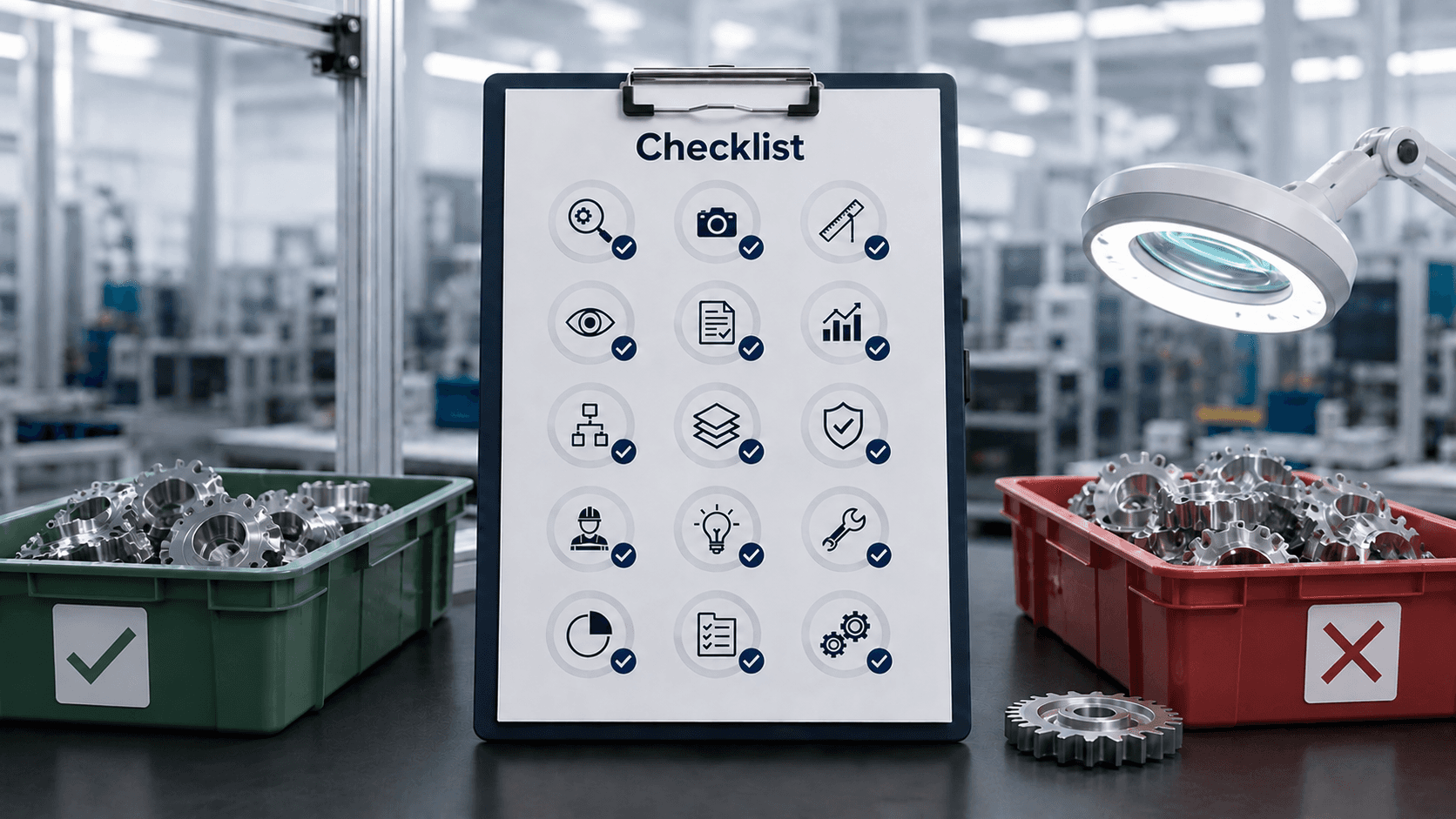
A checklist for creating a defect library makes it possible to verify that nothing essential has been forgotten.
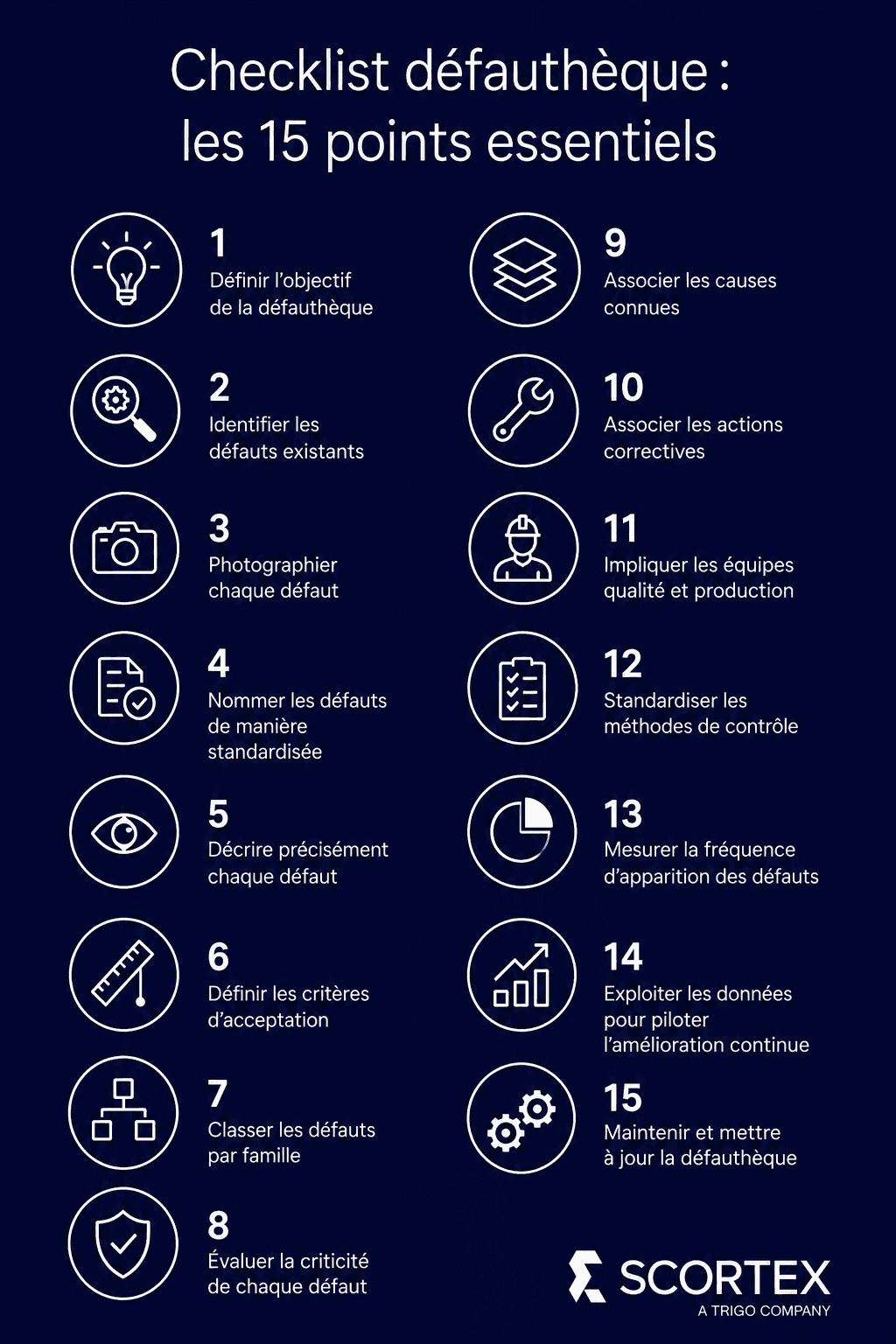
The 15 essential points to verify
1. Are the most frequent defects documented?
A defect library must cover the defects actually encountered on the production lines and not just those described in historical procedures.
2. Are critical defects clearly identified?
Teams must be able to immediately distinguish defects requiring systematic rejection from those that fall under simple monitoring.
3. Does each defect have visual examples?
Textual descriptions often generate different interpretations. Visual examples significantly reduce this subjectivity.
4. Are acceptable defects documented?
This is one of the most common omissions.
In many factories, only rejected defects are recorded. However, documenting acceptable anomalies is often essential to clearly define the boundary between conformity and non-conformity.
5. Are the decision criteria understandable?
An operator must be able to quickly understand why a part is accepted or rejected without having to consult several complementary documents.
Verifying the robustness of the reference system
6. Did experienced operators participate in its creation?
A large part of quality expertise relies on field experience. Ignoring this knowledge often leads to creating a theoretical defect library, divorced from reality.
7. Are the quality and production teams aligned?
An effective defect library must be shared by all stakeholders involved in the quality decision.
8. Are defects classified by severity level?
Distinguishing between critical, major, minor, or acceptable defects facilitates trade-offs and decision-making.
9. Are sensitive areas of the parts identified?
The same defect may be acceptable in a low-visibility area and unacceptable near a decoration, logo, or functional surface.
10. Do the criteria take the final customer into account?
Requirements vary greatly across sectors.
In luxury or cosmetics, certain purely aesthetic imperfections can be deemed critical, whereas they would be tolerated in other industrial environments.
Preparing for continuous improvement
11. Is the defect library updated regularly?
A frozen defect library quickly becomes obsolete.
Changes in materials, suppliers, or processes generate new defects that must be integrated into the reference system.
12. Do complaints feed the reference system?
Each quality incident is an opportunity to enrich and improve existing content.
13. Is inspection data utilized?
Modern visual inspection systems now make it possible to keep thousands of images and anomalies observed in production.
This data is a particularly rich source for enriching a defect library with real cases.
14. Are quality trends analyzed?
Some companies use inspection data to identify the areas most frequently affected by defects or recurring process drifts.
This approach progressively transforms the defect library into a continuous improvement tool.
15. Is the reference system ready for automation?
Before deploying an automated inspection solution, it is essential to ensure that quality criteria are sufficiently clear.
Automation does not create the rules. It applies those defined by the company.
Why this checklist becomes strategic with AI
Manufacturers deploying an artificial intelligence-based inspection solution often discover an unexpected reality: technology highlights inconsistencies already present in manual inspection.
Implicit rules, differences in interpretation between teams, or criteria that have never been formalized then become visible.
It is precisely in this context that a robust defect library takes on its full value.
Certain solutions like Spark by Scortex also make it possible to gradually feed the reference system using inspection images, historical data, and visualizations of detected anomalies. The goal is not to replace the operators' expertise but to make it more easily shareable, traceable, and usable over time.
A useful checklist far beyond quality control
A well-structured defect library provides benefits that go far beyond the scope of inspection.
It facilitates the training of new employees, speeds up root cause analysis, improves communication between departments, and helps preserve the company's industrial know-how.
In some cases, it even becomes a true quality memory, capable of documenting several years of field feedback.
Before seeking to improve your inspection performance, ensure that your quality reference system rests on solid foundations. A complete, maintained, and shared defect library remains one of the most effective tools for corporate experience accumulated in the field into sustainable and usable knowledge for the entire organization.
Here are other articles that might interest you:
FAQ
What is a defect library checklist?
Which defects should be included in a defect library?
Who should participate in creating a defect library?
How often should a defect library be updated?
What is the most common mistake when creating a defect library?
Defect library checklist: the 15 essential points
Published on
by
Scortex Team
A defect library is often created to meet an immediate need: training an operator, preparing for an audit, handling a complaint, or launching a quality control automation project. Yet, a few months later, many of these reference systems are already no longer up to date. New defects appear, products evolve, suppliers change, and teams gradually adopt habits that stray from the initial criteria.
The result is rarely visible immediately. Discrepancies accumulate gradually until they cause disagreements between teams, an increase in scrap, or difficulties in explaining certain quality decisions.
This is why simply having a defect library is not enough. It is still necessary to ensure that it contains the right information, that it reflects the reality of production, and that it remains usable over time.
This defect library checklist gathers the 15 points that quality managers should verify before considering their reference system as truly operational. It is based on feedback observed in sectors as varied as cosmetics, packaging, plastic injection, machined metal, or products with high aesthetic requirements.
Why use a defect library checklist?
Many companies already have photos of defects. On the other hand, few have a real method for structuring and maintaining their reference system.
An effective defect library is not only used to identify non-conformities. It also helps transmit quality know-how, align teams, and maintain a memory of problems encountered in production.
In several industrial projects observed by Scortex, automation highlighted a recurring problem: quality rules existed, but they were rarely documented with enough precision to be applied consistently.
A checklist for creating a defect library makes it possible to verify that nothing essential has been forgotten.
The 15 essential points to verify
1. Are the most frequent defects documented?
A defect library must cover the defects actually encountered on the production lines and not just those described in historical procedures.
2. Are critical defects clearly identified?
Teams must be able to immediately distinguish defects requiring systematic rejection from those that fall under simple monitoring.
3. Does each defect have visual examples?
Textual descriptions often generate different interpretations. Visual examples significantly reduce this subjectivity.
4. Are acceptable defects documented?
This is one of the most common omissions.
In many factories, only rejected defects are recorded. However, documenting acceptable anomalies is often essential to clearly define the boundary between conformity and non-conformity.
5. Are the decision criteria understandable?
An operator must be able to quickly understand why a part is accepted or rejected without having to consult several complementary documents.
Verifying the robustness of the reference system
6. Did experienced operators participate in its creation?
A large part of quality expertise relies on field experience. Ignoring this knowledge often leads to creating a theoretical defect library, divorced from reality.
7. Are the quality and production teams aligned?
An effective defect library must be shared by all stakeholders involved in the quality decision.
8. Are defects classified by severity level?
Distinguishing between critical, major, minor, or acceptable defects facilitates trade-offs and decision-making.
9. Are sensitive areas of the parts identified?
The same defect may be acceptable in a low-visibility area and unacceptable near a decoration, logo, or functional surface.
10. Do the criteria take the final customer into account?
Requirements vary greatly across sectors.
In luxury or cosmetics, certain purely aesthetic imperfections can be deemed critical, whereas they would be tolerated in other industrial environments.
Preparing for continuous improvement
11. Is the defect library updated regularly?
A frozen defect library quickly becomes obsolete.
Changes in materials, suppliers, or processes generate new defects that must be integrated into the reference system.
12. Do complaints feed the reference system?
Each quality incident is an opportunity to enrich and improve existing content.
13. Is inspection data utilized?
Modern visual inspection systems now make it possible to keep thousands of images and anomalies observed in production.
This data is a particularly rich source for enriching a defect library with real cases.
14. Are quality trends analyzed?
Some companies use inspection data to identify the areas most frequently affected by defects or recurring process drifts.
This approach progressively transforms the defect library into a continuous improvement tool.
15. Is the reference system ready for automation?
Before deploying an automated inspection solution, it is essential to ensure that quality criteria are sufficiently clear.
Automation does not create the rules. It applies those defined by the company.
Why this checklist becomes strategic with AI
Manufacturers deploying an artificial intelligence-based inspection solution often discover an unexpected reality: technology highlights inconsistencies already present in manual inspection.
Implicit rules, differences in interpretation between teams, or criteria that have never been formalized then become visible.
It is precisely in this context that a robust defect library takes on its full value.
Certain solutions like Spark by Scortex also make it possible to gradually feed the reference system using inspection images, historical data, and visualizations of detected anomalies. The goal is not to replace the operators' expertise but to make it more easily shareable, traceable, and usable over time.
A useful checklist far beyond quality control
A well-structured defect library provides benefits that go far beyond the scope of inspection.
It facilitates the training of new employees, speeds up root cause analysis, improves communication between departments, and helps preserve the company's industrial know-how.
In some cases, it even becomes a true quality memory, capable of documenting several years of field feedback.
Before seeking to improve your inspection performance, ensure that your quality reference system rests on solid foundations. A complete, maintained, and shared defect library remains one of the most effective tools for corporate experience accumulated in the field into sustainable and usable knowledge for the entire organization.
Here are other articles that might interest you:
FAQ
What is a defect library checklist?
Which defects should be included in a defect library?
Who should participate in creating a defect library?
How often should a defect library be updated?
What is the most common mistake when creating a defect library?
Let's discuss your quality today.

Scortex team is happy to answer your questions.
Let's discuss your quality today.
Scortex team is happy to answer your questions.

Join our newsletter
Some visuals on this site were generated using AI.
Join our newsletter
Some visuals on this site were generated using AI.