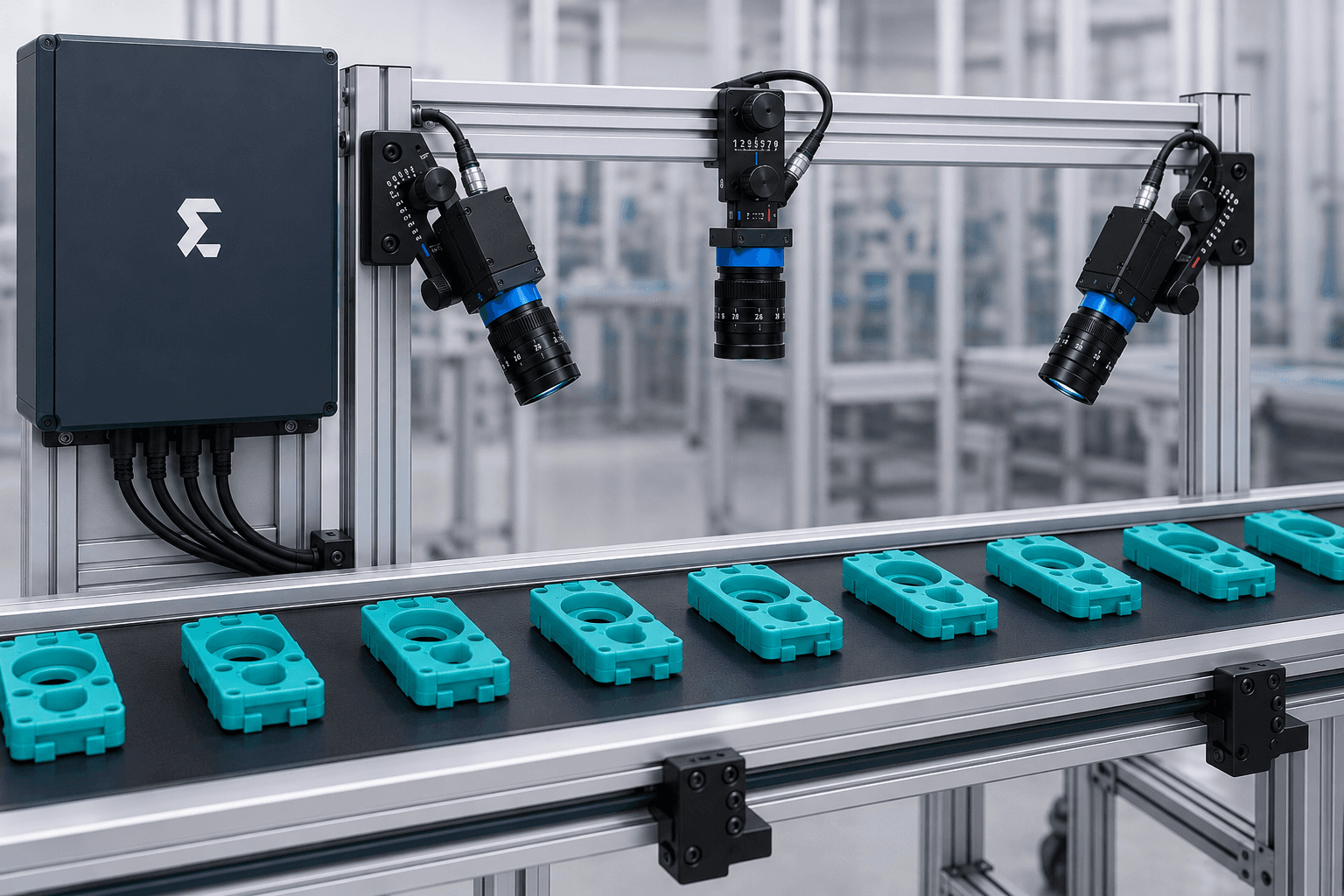
5 levers to improve quality analysis
Published on
by
Scortex Team
In many factories, quality teams are under constant pressure. Production rates are increasing, product references are multiplying, customer requirements are becoming stricter, but staff numbers rarely grow at the same pace. As a result, operators spend more time sorting, checking, and re-checking, to the detriment of actual quality analysis.
The problem is not just the volume of parts to inspect. It mainly stems from the fact that most manufacturers still have very little actionable data on their inspections. Many operate with manual inspections, paper records, subjective decisions, and limited traceability. When a drift occurs, teams often discover the problem too late: after a customer complaint, an increase in scrap, or an entire batch needing rework.
Improving quality analysis is therefore not simply about "inspecting more". It is about better understanding defects, detecting drifts earlier, and focusing teams on high-value decision-making. This is precisely what automated inspection systems with AI like Spark by Scortex enable today when they are used as tools to assist in analysis and not just as simple sorting machines.
Lever n°1: Transforming inspections into actionable data
In many factories, quality control produces very little truly actionable data. A part is seen, sorted, and then disappears. The quality information disappears with it.
With a modern approach to visual inspection, each check can instead generate:
an image of the part,
a quality decision,
a heatmap localizing the anomaly,
a timestamped history,
and actionable analysis data.
This difference completely changes the quality teams' analysis capabilities.
Instead of working solely on field impressions or operator feedback, quality managers have a visual and structured industrial memory.
For some manufacturers, this use of data has made it possible to:
identify machine drifts previously invisible,
correlate defects with process settings,
or even detect supplier quality discrepancies.
The analysis of inspection results then becomes factual and much faster.
Lever n°2: Reducing operators' mental load
One of the common mistakes is to believe that quality performance depends solely on human attention.
In industrial reality, visual and mental fatigue always ends up creating:
false rejects,
inconsistencies,
or defects passing through.
In some cosmetics lines, operators must check two parts per second for several hours. Very frequent rotations become necessary to maintain vigilance.
This fatigue greatly reduces the teams' analysis capacity.
The benefit of a solution like Spark, an automated quality control system with AI, is not to eliminate the human role. It is to automate the first level of detection so that operators can focus on:
truly suspect parts,
quality arbitrations,
and corrective actions.
Lever n°3: Detecting drifts before customer complaints
One of the strongest field observations at Scortex is that manufacturers often talk more about customer complaints than their actual scrap rates.
Why?
Because a drift detected late costs much more than scrap that is visible immediately.
A good quality analysis must therefore allow weak signals to be seen before they become critical.
Thanks to the tracking of ejection rates over time, heatmaps, and visual histories, factories that have deployed Spark, our quality control solution with AI, have been able to:
detect a problem related to the raw material received,
anomalies on finished products,
assembly defects,
identify material drifts,
or trace back to a supplier defect.
Without continuous analysis of inspections, this would probably have been discovered much later.
Lever n°4: Standardizing quality decisions
In many industrial environments, the main difficulty is not detecting an obvious defect. The real problem is stabilizing decisions on borderline cases.
This is particularly true in:
cosmetics,
premium packaging,
shiny parts,
or products with high aesthetic value.
The same defect can be considered:
acceptable by one operator,
critical by another,
or tolerated depending on the final customer.
Quality documents are often incomplete, theoretical, or outdated.
In some projects, Spark has precisely made it possible to reveal:
specification inconsistencies,
criteria impossible to apply at real production speed,
or grey areas never documented.
The benefit of AI here is to provide a stable reference system.
Lever n°5: Leveraging anomaly detection rather than a simple defect list
Many classic vision systems still work with fixed rules or lists of known defects.
The problem is that in real production:
new defects constantly appear,
processes evolve,
materials change,
suppliers vary.
An approach based solely on known defects quickly ends up showing its limits.
Spark's AI relies mainly on an anomaly detection logic:
the AI learns what a compliant part is,
it then flags any unusual discrepancy.
This approach brings several advantages for quality analysis:
detection of unknown drifts,
better adaptability,
less dependence on an exhaustive defect library,
faster project startup,
and better coverage of real field cases.
In complex environments such as shiny or decorated surfaces, this logic also makes it possible to better absorb natural production variations.
The goal is no longer just to "look for a defect".
It becomes possible to understand what deviates from the normal behavior of the process.
Why quality analysis is becoming a strategic lever
Today, the most advanced manufacturers no longer consider inspection to be a simple sorting step.
They use inspection data to:
improve their process settings,
reduce complaints,
and accelerate continuous improvement.
Quality control is progressively becoming:
a source of industrial knowledge,
a decision support tool,
and a lever for overall performance.
This also explains why modern automated inspection systems are no longer limited to a simple camera + ejection system logic. They must now produce understandable, traceable, and actionable data over time.
The manufacturers making the most progress today are those who succeed in transforming their inspections into actionable data, detecting drifts earlier, and refocusing operators on high-value decision-making. A solution like Spark precisely allows the automation of the most repetitive tasks while strengthening quality analysis and process understanding.
Here are other articles that might interest you:
· AI-powered automated quality control: automotive industry
· Reducing hidden costs through automated visual inspection
· Quality inspection: what is it for?
FAQ
How to improve quality analysis in industrial production?
How to reduce customer complaints related to visual defects?
Why is inspection data becoming strategic?
Which metrics should be tracked to improve quality analysis?
5 levers to improve quality analysis
Published on
by
Scortex Team
In many factories, quality teams are under constant pressure. Production rates are increasing, product references are multiplying, customer requirements are becoming stricter, but staff numbers rarely grow at the same pace. As a result, operators spend more time sorting, checking, and re-checking, to the detriment of actual quality analysis.
The problem is not just the volume of parts to inspect. It mainly stems from the fact that most manufacturers still have very little actionable data on their inspections. Many operate with manual inspections, paper records, subjective decisions, and limited traceability. When a drift occurs, teams often discover the problem too late: after a customer complaint, an increase in scrap, or an entire batch needing rework.
Improving quality analysis is therefore not simply about "inspecting more". It is about better understanding defects, detecting drifts earlier, and focusing teams on high-value decision-making. This is precisely what automated inspection systems with AI like Spark by Scortex enable today when they are used as tools to assist in analysis and not just as simple sorting machines.
Lever n°1: Transforming inspections into actionable data
In many factories, quality control produces very little truly actionable data. A part is seen, sorted, and then disappears. The quality information disappears with it.
With a modern approach to visual inspection, each check can instead generate:
an image of the part,
a quality decision,
a heatmap localizing the anomaly,
a timestamped history,
and actionable analysis data.
This difference completely changes the quality teams' analysis capabilities.
Instead of working solely on field impressions or operator feedback, quality managers have a visual and structured industrial memory.
For some manufacturers, this use of data has made it possible to:
identify machine drifts previously invisible,
correlate defects with process settings,
or even detect supplier quality discrepancies.
The analysis of inspection results then becomes factual and much faster.
Lever n°2: Reducing operators' mental load
One of the common mistakes is to believe that quality performance depends solely on human attention.
In industrial reality, visual and mental fatigue always ends up creating:
false rejects,
inconsistencies,
or defects passing through.
In some cosmetics lines, operators must check two parts per second for several hours. Very frequent rotations become necessary to maintain vigilance.
This fatigue greatly reduces the teams' analysis capacity.
The benefit of a solution like Spark, an automated quality control system with AI, is not to eliminate the human role. It is to automate the first level of detection so that operators can focus on:
truly suspect parts,
quality arbitrations,
and corrective actions.
Lever n°3: Detecting drifts before customer complaints
One of the strongest field observations at Scortex is that manufacturers often talk more about customer complaints than their actual scrap rates.
Why?
Because a drift detected late costs much more than scrap that is visible immediately.
A good quality analysis must therefore allow weak signals to be seen before they become critical.
Thanks to the tracking of ejection rates over time, heatmaps, and visual histories, factories that have deployed Spark, our quality control solution with AI, have been able to:
detect a problem related to the raw material received,
anomalies on finished products,
assembly defects,
identify material drifts,
or trace back to a supplier defect.
Without continuous analysis of inspections, this would probably have been discovered much later.
Lever n°4: Standardizing quality decisions
In many industrial environments, the main difficulty is not detecting an obvious defect. The real problem is stabilizing decisions on borderline cases.
This is particularly true in:
cosmetics,
premium packaging,
shiny parts,
or products with high aesthetic value.
The same defect can be considered:
acceptable by one operator,
critical by another,
or tolerated depending on the final customer.
Quality documents are often incomplete, theoretical, or outdated.
In some projects, Spark has precisely made it possible to reveal:
specification inconsistencies,
criteria impossible to apply at real production speed,
or grey areas never documented.
The benefit of AI here is to provide a stable reference system.
Lever n°5: Leveraging anomaly detection rather than a simple defect list
Many classic vision systems still work with fixed rules or lists of known defects.
The problem is that in real production:
new defects constantly appear,
processes evolve,
materials change,
suppliers vary.
An approach based solely on known defects quickly ends up showing its limits.
Spark's AI relies mainly on an anomaly detection logic:
the AI learns what a compliant part is,
it then flags any unusual discrepancy.
This approach brings several advantages for quality analysis:
detection of unknown drifts,
better adaptability,
less dependence on an exhaustive defect library,
faster project startup,
and better coverage of real field cases.
In complex environments such as shiny or decorated surfaces, this logic also makes it possible to better absorb natural production variations.
The goal is no longer just to "look for a defect".
It becomes possible to understand what deviates from the normal behavior of the process.
Why quality analysis is becoming a strategic lever
Today, the most advanced manufacturers no longer consider inspection to be a simple sorting step.
They use inspection data to:
improve their process settings,
reduce complaints,
and accelerate continuous improvement.
Quality control is progressively becoming:
a source of industrial knowledge,
a decision support tool,
and a lever for overall performance.
This also explains why modern automated inspection systems are no longer limited to a simple camera + ejection system logic. They must now produce understandable, traceable, and actionable data over time.
The manufacturers making the most progress today are those who succeed in transforming their inspections into actionable data, detecting drifts earlier, and refocusing operators on high-value decision-making. A solution like Spark precisely allows the automation of the most repetitive tasks while strengthening quality analysis and process understanding.
Here are other articles that might interest you:
· AI-powered automated quality control: automotive industry
· Reducing hidden costs through automated visual inspection
· Quality inspection: what is it for?
FAQ
How to improve quality analysis in industrial production?
How to reduce customer complaints related to visual defects?
Why is inspection data becoming strategic?
Which metrics should be tracked to improve quality analysis?
Let's discuss your quality today.

Scortex team is happy to answer your questions.
Let's discuss your quality today.
Scortex team is happy to answer your questions.

Join our newsletter
Some visuals on this site were generated using AI.
Join our newsletter
Some visuals on this site were generated using AI.