Reduce hidden costs through automated visual inspection
Published on
by
In many factories, visible quality costs are only the tip of the iceberg. Scrap, rework, line stoppages, customer complaints, operator fatigue, time spent sorting parts manually: these losses add up and end up weighing heavily on industrial profitability.
The issue becomes even more critical when parts have demanding aesthetic requirements. A micro-scratch on a shiny part, an appearance defect on an injection-molded plastic part, or a burn mark on a metal part can be enough to trigger customer rejection or damage a brand's image.
Automated visual inspection is therefore attracting more and more manufacturers. But behind this term, the technical realities are very different. Some solutions work well on simple, repetitive parts, but quickly show their limits on complex geometries, shiny surfaces or production runs with many series changes or parts with large variations.
Here is how manufacturers are using AI and automated inspection today to reduce their hidden costs, make quality more reliable, and relieve shop-floor teams without replacing manual quality control.
Why hidden costs explode in quality control
Defects detected late rarely cost only the price of the rejected part.
When a defect makes it into production, several indirect costs appear:
operator time for sorting and rework
slower production rates
disputes or customer returns
quality wall for emergency manual over-inspection
impact on brand image and the customer relationship
We see this with our customers: these costs rise quickly because appearance requirements are high. A part may be technically functional but rejected for a simple visual defect.
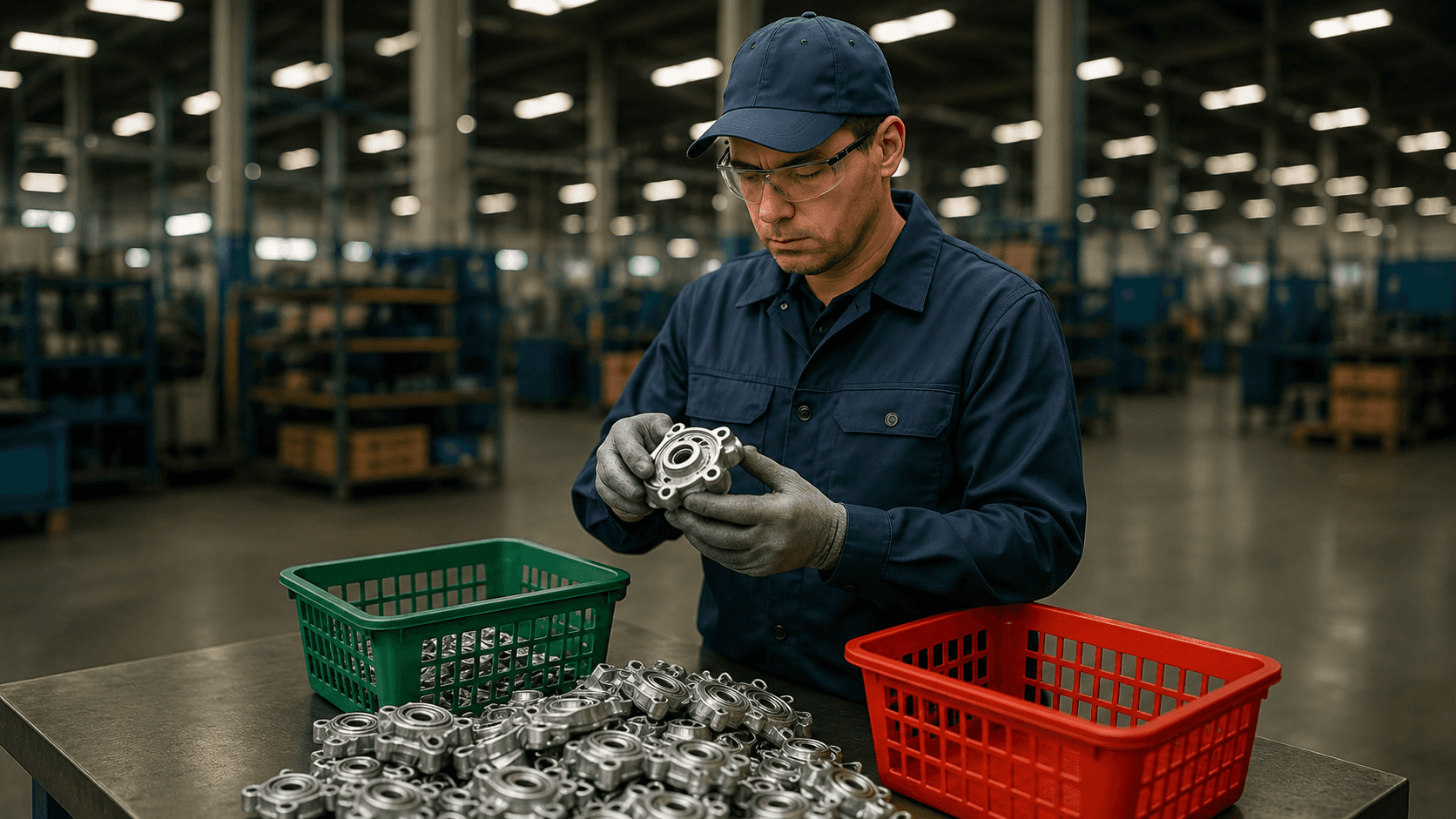
On the shop floor, quality managers also observe a recurring phenomenon: human variability. An operator may perfectly detect a defect at the start of a shift and then become less consistent after several hours of repetitive inspection.
Automated or manual inspection then becomes an ongoing trade-off between throughput, fatigue, and quality requirements.
The real problem: complex appearance defects
Inspecting an industrial part seems simple until the real production conditions appear.
Manufacturers often have to deal with:
shiny or reflective surfaces
complex geometries
frequent reference changes
fine decorations or sensitive prints
low-contrast defects
This is particularly true in injection molding, machined metal parts, parts with surface treatment (galvanizing), packaging or label manufacturing, or cosmetic products.
For example, one of our clients, a leading cosmetics manufacturer, had to inspect products with many variations in shades and shapes. The inspectors spent a considerable amount of time checking the appearance of the parts from several angles, with difficulty maintaining a consistent level of inspection throughout the day.
In another industrial context, another client, a manufacturer of premium bottles for wines and spirits, was looking to detect appearance defects on complex and shiny glass surfaces while maintaining a production rate of 130 parts per minute.
These situations explain why traditional industrial vision approaches based solely on fixed rules quickly reach their limits.
How AI concretely reduces hidden costs
The main objective is not only to automate inspection.
Manufacturers are mainly looking to reduce invisible losses that gradually degrade their quality performance.
AI applied to visual inspection generally acts on four levers.
1. Reduce defects that reach the customer
Detecting a defect before shipment avoids often very high costs: returns, disputes, batch destruction, additional audits or loss of customer trust.
In premium sectors, the reputational cost can even exceed the direct industrial cost.
Solutions such as Spark from Scortex are used to inspect complex appearance defects in real time directly on the production line in order to limit these risks.
2. Reduce false rejections
A poorly calibrated system can create more scrap than it prevents.
Manufacturers therefore look for solutions capable of finely adjusting detection sensitivity according to real production requirements.
This control is essential in sectors where the natural variations of parts remain acceptable but are difficult to distinguish automatically.
3. Free up operator time
Automating the first level of inspection allows quality operators to focus more on:
· Calibration of the deployed quality system
· Annotation of parts to refine anomaly detection
· Support in identifying root causes
· Support for continuous improvement
· complex inspections
The goal is not to eliminate human expertise but to reduce the burden linked to repetitive and visually tiring tasks.
4. Make use of quality data
Modern inspection systems also generate useful data for improving industrial processes.
Defect history, timestamped images, tracking scrap rates or process drift analysis enable quality and methods teams to identify recurring problems more quickly.
Automated or manual inspection: do you have to choose?
Most manufacturers who have matured this idea no longer seek to pit the two approaches against each other.
Automated or manual inspection generally works better when they are complementary.
Human inspection remains particularly relevant for:
complex trade-offs
in-depth quality analyses
exceptional situations
process improvement
Conversely, automated systems bring strong value in:
repetitive tasks
line-speed inspections
multi-camera inspections
stability of decision criteria
Among our customers who have greatly increased their production volumes, this complementarity often becomes essential to maintain a consistent quality level.
What quality managers are looking for today
Expectations have changed significantly in recent years.
Manufacturers no longer want just a camera or vision software.
They are looking for solutions capable of:
adapting to real production constraints
managing complex aesthetic parts
evolving with reference changes
providing actionable data
remaining simple to use by shop-floor teams
This evolution explains why industrial AI projects are developing particularly in sectors with high aesthetic requirements such as cosmetics, premium packaging, luxury goods or certain automotive applications.
Reducing hidden costs no longer means simply more inspection. It mainly means more reliable, more stable inspection that is better integrated into the actual operation of the factory.
Automated visual inspection then becomes as much a continuous improvement tool as a means of detecting defects.
FAQ - Reducing hidden quality costs
How can scrap be reduced in industrial production?
Earlier defect detection helps avoid late rework, massive sorting and shipping of non-conforming parts. Automated visual inspection systems help stabilize quality directly on the production line.
How can customer complaints be reduced in quality control?
One of the most effective levers is to detect defects before shipment through stable, repeatable automated inspection with AI, capable of inspecting parts at line speed and from multiple angles in a single pass.
What is automated visual inspection?
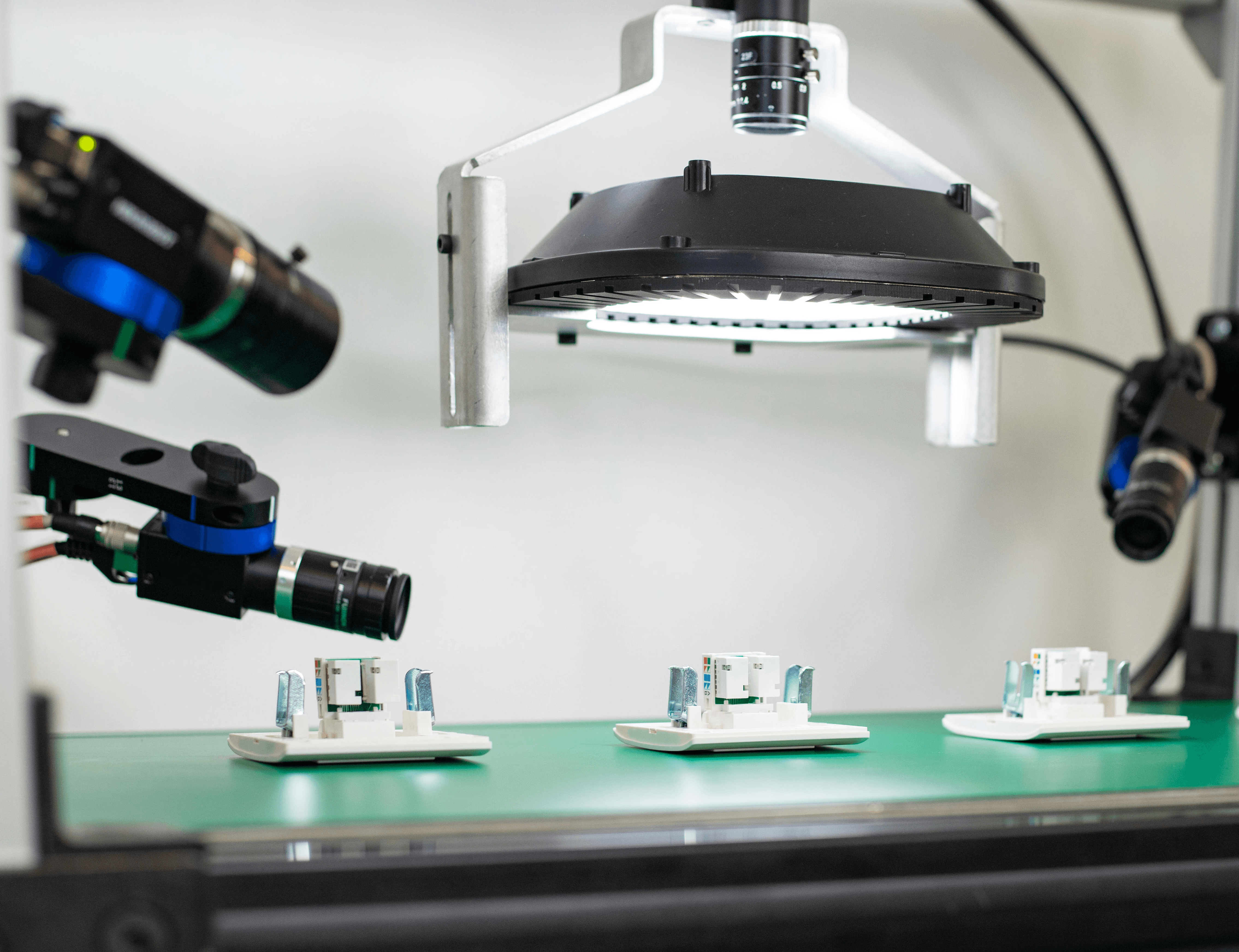
Automated visual inspection consists of using cameras and image analysis software to automatically detect defects on industrial parts directly in production.
What system can automatically detect defects on industrial parts?
Automated visual inspection solutions with AI are now used to automatically detect appearance defects on plastic, metal, cosmetic or packaging parts, even when the geometries are complex.
How can quality control be automated without replacing operators?
Current AI systems mainly automate repetitive and tiring tasks. Quality operators remain essential for defect analysis, complex trade-offs and support for continuous improvement.
Why do manufacturers use AI for quality control?
AI makes it possible to better manage real production variations and defects that are difficult to program with fixed rules, especially on demanding, shiny surfaces, complex parts or products with high aesthetic requirements.
What defects can be automatically detected with AI?
AI-based quality control systems can detect
· scratches,
· burrs,
· chips
· missing material
· Label alignment
· Presence / absence
· print defects,
· orange peel,
· burn marks,
· missing material
· assembly issues
· or appearance defects on complex surfaces depending on the level of precision required.
· Other
Here are other articles that might interest you:
AI visual inspection for shiny parts
Reduce hidden costs through automated visual inspection
Published on
by
In many factories, visible quality costs are only the tip of the iceberg. Scrap, rework, line stoppages, customer complaints, operator fatigue, time spent sorting parts manually: these losses add up and end up weighing heavily on industrial profitability.
The issue becomes even more critical when parts have demanding aesthetic requirements. A micro-scratch on a shiny part, an appearance defect on an injection-molded plastic part, or a burn mark on a metal part can be enough to trigger customer rejection or damage a brand's image.
Automated visual inspection is therefore attracting more and more manufacturers. But behind this term, the technical realities are very different. Some solutions work well on simple, repetitive parts, but quickly show their limits on complex geometries, shiny surfaces or production runs with many series changes or parts with large variations.
Here is how manufacturers are using AI and automated inspection today to reduce their hidden costs, make quality more reliable, and relieve shop-floor teams without replacing manual quality control.
Why hidden costs explode in quality control
Defects detected late rarely cost only the price of the rejected part.
When a defect makes it into production, several indirect costs appear:
operator time for sorting and rework
slower production rates
disputes or customer returns
quality wall for emergency manual over-inspection
impact on brand image and the customer relationship
We see this with our customers: these costs rise quickly because appearance requirements are high. A part may be technically functional but rejected for a simple visual defect.
On the shop floor, quality managers also observe a recurring phenomenon: human variability. An operator may perfectly detect a defect at the start of a shift and then become less consistent after several hours of repetitive inspection.
Automated or manual inspection then becomes an ongoing trade-off between throughput, fatigue, and quality requirements.
The real problem: complex appearance defects
Inspecting an industrial part seems simple until the real production conditions appear.
Manufacturers often have to deal with:
shiny or reflective surfaces
complex geometries
frequent reference changes
fine decorations or sensitive prints
low-contrast defects
This is particularly true in injection molding, machined metal parts, parts with surface treatment (galvanizing), packaging or label manufacturing, or cosmetic products.
For example, one of our clients, a leading cosmetics manufacturer, had to inspect products with many variations in shades and shapes. The inspectors spent a considerable amount of time checking the appearance of the parts from several angles, with difficulty maintaining a consistent level of inspection throughout the day.
In another industrial context, another client, a manufacturer of premium bottles for wines and spirits, was looking to detect appearance defects on complex and shiny glass surfaces while maintaining a production rate of 130 parts per minute.
These situations explain why traditional industrial vision approaches based solely on fixed rules quickly reach their limits.
How AI concretely reduces hidden costs
The main objective is not only to automate inspection.
Manufacturers are mainly looking to reduce invisible losses that gradually degrade their quality performance.
AI applied to visual inspection generally acts on four levers.
1. Reduce defects that reach the customer
Detecting a defect before shipment avoids often very high costs: returns, disputes, batch destruction, additional audits or loss of customer trust.
In premium sectors, the reputational cost can even exceed the direct industrial cost.
Solutions such as Spark from Scortex are used to inspect complex appearance defects in real time directly on the production line in order to limit these risks.
2. Reduce false rejections
A poorly calibrated system can create more scrap than it prevents.
Manufacturers therefore look for solutions capable of finely adjusting detection sensitivity according to real production requirements.
This control is essential in sectors where the natural variations of parts remain acceptable but are difficult to distinguish automatically.
3. Free up operator time
Automating the first level of inspection allows quality operators to focus more on:
· Calibration of the deployed quality system
· Annotation of parts to refine anomaly detection
· Support in identifying root causes
· Support for continuous improvement
· complex inspections
The goal is not to eliminate human expertise but to reduce the burden linked to repetitive and visually tiring tasks.
4. Make use of quality data
Modern inspection systems also generate useful data for improving industrial processes.
Defect history, timestamped images, tracking scrap rates or process drift analysis enable quality and methods teams to identify recurring problems more quickly.
Automated or manual inspection: do you have to choose?
Most manufacturers who have matured this idea no longer seek to pit the two approaches against each other.
Automated or manual inspection generally works better when they are complementary.
Human inspection remains particularly relevant for:
complex trade-offs
in-depth quality analyses
exceptional situations
process improvement
Conversely, automated systems bring strong value in:
repetitive tasks
line-speed inspections
multi-camera inspections
stability of decision criteria
Among our customers who have greatly increased their production volumes, this complementarity often becomes essential to maintain a consistent quality level.
What quality managers are looking for today
Expectations have changed significantly in recent years.
Manufacturers no longer want just a camera or vision software.
They are looking for solutions capable of:
adapting to real production constraints
managing complex aesthetic parts
evolving with reference changes
providing actionable data
remaining simple to use by shop-floor teams
This evolution explains why industrial AI projects are developing particularly in sectors with high aesthetic requirements such as cosmetics, premium packaging, luxury goods or certain automotive applications.
Reducing hidden costs no longer means simply more inspection. It mainly means more reliable, more stable inspection that is better integrated into the actual operation of the factory.
Automated visual inspection then becomes as much a continuous improvement tool as a means of detecting defects.
FAQ - Reducing hidden quality costs
How can scrap be reduced in industrial production?
Earlier defect detection helps avoid late rework, massive sorting and shipping of non-conforming parts. Automated visual inspection systems help stabilize quality directly on the production line.
How can customer complaints be reduced in quality control?
One of the most effective levers is to detect defects before shipment through stable, repeatable automated inspection with AI, capable of inspecting parts at line speed and from multiple angles in a single pass.
What is automated visual inspection?
Automated visual inspection consists of using cameras and image analysis software to automatically detect defects on industrial parts directly in production.
What system can automatically detect defects on industrial parts?
Automated visual inspection solutions with AI are now used to automatically detect appearance defects on plastic, metal, cosmetic or packaging parts, even when the geometries are complex.
How can quality control be automated without replacing operators?
Current AI systems mainly automate repetitive and tiring tasks. Quality operators remain essential for defect analysis, complex trade-offs and support for continuous improvement.
Why do manufacturers use AI for quality control?
AI makes it possible to better manage real production variations and defects that are difficult to program with fixed rules, especially on demanding, shiny surfaces, complex parts or products with high aesthetic requirements.
What defects can be automatically detected with AI?
AI-based quality control systems can detect
· scratches,
· burrs,
· chips
· missing material
· Label alignment
· Presence / absence
· print defects,
· orange peel,
· burn marks,
· missing material
· assembly issues
· or appearance defects on complex surfaces depending on the level of precision required.
· Other
Here are other articles that might interest you:
AI visual inspection for shiny parts
Let's discuss your quality today.

Scortex team is happy to answer your questions.
Let's discuss your quality today.
Scortex team is happy to answer your questions.

Join our newsletter
Some visuals on this site were generated using AI.
Join our newsletter
Some visuals on this site were generated using AI.