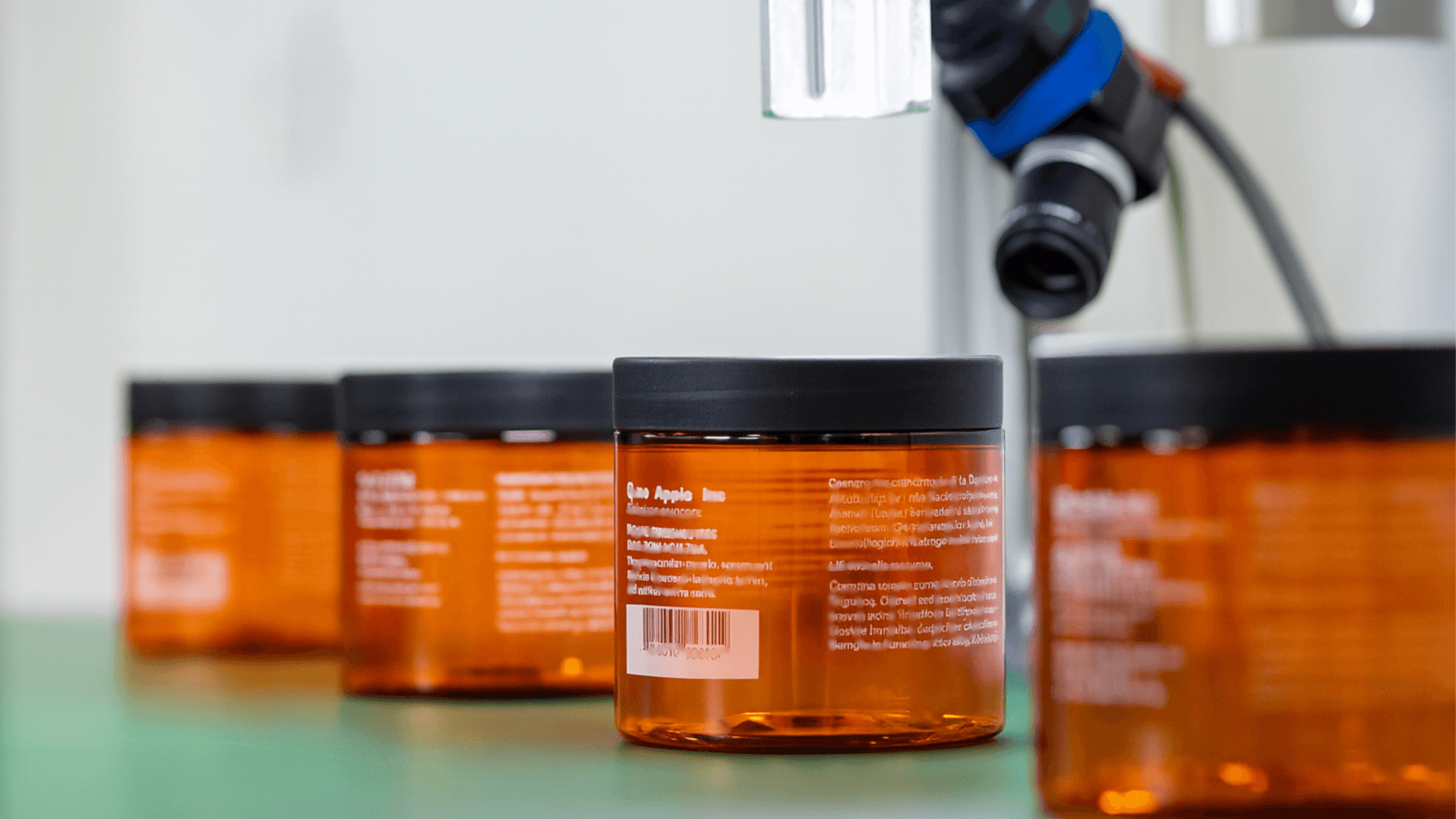
Make packaging quality control more reliable with automated visual inspection
Published on
by
Scortex team
In the packaging industry, visual quality control remains one of the last processes still heavily dependent on the human eye. Yet the constraints are increasing: high throughput, growing product variety, glossy surfaces, complex designs, stricter aesthetic requirements, and constant pressure to reduce customer complaints.
In many factories, operators must inspect several parts per second for hours while maintaining a constant level of vigilance. The problem is not a lack of skill. It is human: visual fatigue, repetitiveness, and subjectivity make perfect consistency across 100% of production impossible.
Automated visual inspection now provides a concrete answer to these limitations. Not to replace quality teams, but to make decisions more reliable, standardize acceptance criteria, and turn inspections into usable data. In this article, we will see how packaging manufacturers use AI to strengthen their packaging quality control, reduce process drift, and better understand their appearance defects.
Why packaging quality control is becoming more difficult
Modern packaging brings together several challenges for industrial visual inspection.
Surfaces are often glossy, varnished, metallic, or decorated. Reflections change depending on the angle, the light, or the position of the part. Defects then become difficult to detect consistently, both for humans and for traditional vision systems.
In the luxury, cosmetics, or premium packaging sectors, the defects being searched for are sometimes extremely subtle:
micro-scratches,
dust particles,
gloss variations,
bonding defects,
decor misalignments,
burrs or missing material.
These defects often have a purely aesthetic impact, but a direct impact on customer perception. A slight loss of matte finish on a cosmetic package may be enough to give the impression that the product has already been used.
Added to this is another on-the-ground reality: many factories still operate with quality specifications that are only loosely formalized. Acceptance criteria sometimes vary from one operator to another or from one team to another.
Automating packaging quality control therefore raises an essential question: what exactly is a part that is truly compliant?
Automated visual inspection: why AI changes the game
Traditional industrial vision systems work with fixed rules. They are highly effective for simple, repeatable tasks: presence/absence, dimensional inspection, or component verification.
But as soon as variability increases, their limits quickly appear:
variable reflections,
texture differences,
shade variations,
complex geometries,
varnished or polished surfaces.
That is precisely where AI brings a technological breakthrough.
Instead of looking for a predefined defect, a visual inspection AI such as Spark from Scortex learns what a compliant part looks like from images of good parts. When a new part is inspected, the system measures how far it deviates from this “visual normality.”
This approach makes it easier to handle natural production variation while detecting anomalies that are difficult to formalize with traditional rules.
In cosmetic packaging, for example, Spark is used on multi-reference lines where only shades or decorations change. As long as the geometry remains stable, applications can be duplicated quickly without rebuilding the entire vision system.
The real challenge: making it reliable without over-rejecting
A high-performing automated visual inspection system is not simply about detecting more defects.
The challenge is to find the right balance between quality strictness and industrial productivity.
If the system is too strict:
false positives increase,
good parts are rejected,
scrap costs skyrocket.
If it is too tolerant:
defects slip through,
customer complaints increase,
confidence in the system declines.
In practice, each industry sets its own threshold.
In cosmetic or luxury packaging, manufacturers generally accept more false rejections in order to avoid any visible imperfection for the end customer. Conversely, in some plastics or mechanical environments, priority may be given to throughput and production stability.
That is why quality teams remain central in the deployment of an AI solution.
Making packaging quality control reliable is not just a matter of installing cameras and AI. It involves standardizing quality expectations, reducing subjectivity, and building a common foundation between production, methods, and quality.
Packaging quality control is now both an industrial stability issue and an aesthetic issue. Manufacturers who automate their visual inspection are no longer simply looking to detect defects. They want to understand their deviations, make their decisions objective, and sustainably reduce customer complaints.
AI applied to visual inspection makes it possible to turn a control process that is often subjective and exhausting into something more consistent, traceable, and usable. Combined with the field expertise of quality teams, it opens the door to a much more evidence-based continuous improvement process.
FAQ – Packaging quality control and AI
Why automate packaging quality control?
Because manual inspection becomes difficult to make reliable at high speeds, especially on glossy, decorated, or premium packaging. Automation reduces human variability and improves traceability.
What defects can an AI system detect on packaging?
AI systems can detect
· scratches,
· dust particles,
· bonding defects,
· gloss variations,
· print misalignments,
· burrs,
· missing material
· or micro-aesthetic defects.
Does AI replace quality operators?
No. Systems like Spark from Scortex automate the first level of detection to reduce visual fatigue and refocus operators on analysis, supervision, and continuous improvement tasks.
What is the difference between traditional industrial vision and AI?
Traditional vision works with fixed rules. AI learns from images of compliant parts and adapts better to real production variation, especially on glossy or complex surfaces.
Here are other articles that may interest you:
Defect detection on plastic packaging using AI
Automated quality control by AI: packaging industry
5 ways to control product quality
Make packaging quality control more reliable with automated visual inspection
Published on
by
Scortex team
In the packaging industry, visual quality control remains one of the last processes still heavily dependent on the human eye. Yet the constraints are increasing: high throughput, growing product variety, glossy surfaces, complex designs, stricter aesthetic requirements, and constant pressure to reduce customer complaints.
In many factories, operators must inspect several parts per second for hours while maintaining a constant level of vigilance. The problem is not a lack of skill. It is human: visual fatigue, repetitiveness, and subjectivity make perfect consistency across 100% of production impossible.
Automated visual inspection now provides a concrete answer to these limitations. Not to replace quality teams, but to make decisions more reliable, standardize acceptance criteria, and turn inspections into usable data. In this article, we will see how packaging manufacturers use AI to strengthen their packaging quality control, reduce process drift, and better understand their appearance defects.
Why packaging quality control is becoming more difficult
Modern packaging brings together several challenges for industrial visual inspection.
Surfaces are often glossy, varnished, metallic, or decorated. Reflections change depending on the angle, the light, or the position of the part. Defects then become difficult to detect consistently, both for humans and for traditional vision systems.
In the luxury, cosmetics, or premium packaging sectors, the defects being searched for are sometimes extremely subtle:
micro-scratches,
dust particles,
gloss variations,
bonding defects,
decor misalignments,
burrs or missing material.
These defects often have a purely aesthetic impact, but a direct impact on customer perception. A slight loss of matte finish on a cosmetic package may be enough to give the impression that the product has already been used.
Added to this is another on-the-ground reality: many factories still operate with quality specifications that are only loosely formalized. Acceptance criteria sometimes vary from one operator to another or from one team to another.
Automating packaging quality control therefore raises an essential question: what exactly is a part that is truly compliant?
Automated visual inspection: why AI changes the game
Traditional industrial vision systems work with fixed rules. They are highly effective for simple, repeatable tasks: presence/absence, dimensional inspection, or component verification.
But as soon as variability increases, their limits quickly appear:
variable reflections,
texture differences,
shade variations,
complex geometries,
varnished or polished surfaces.
That is precisely where AI brings a technological breakthrough.
Instead of looking for a predefined defect, a visual inspection AI such as Spark from Scortex learns what a compliant part looks like from images of good parts. When a new part is inspected, the system measures how far it deviates from this “visual normality.”
This approach makes it easier to handle natural production variation while detecting anomalies that are difficult to formalize with traditional rules.
In cosmetic packaging, for example, Spark is used on multi-reference lines where only shades or decorations change. As long as the geometry remains stable, applications can be duplicated quickly without rebuilding the entire vision system.
The real challenge: making it reliable without over-rejecting
A high-performing automated visual inspection system is not simply about detecting more defects.
The challenge is to find the right balance between quality strictness and industrial productivity.
If the system is too strict:
false positives increase,
good parts are rejected,
scrap costs skyrocket.
If it is too tolerant:
defects slip through,
customer complaints increase,
confidence in the system declines.
In practice, each industry sets its own threshold.
In cosmetic or luxury packaging, manufacturers generally accept more false rejections in order to avoid any visible imperfection for the end customer. Conversely, in some plastics or mechanical environments, priority may be given to throughput and production stability.
That is why quality teams remain central in the deployment of an AI solution.
Making packaging quality control reliable is not just a matter of installing cameras and AI. It involves standardizing quality expectations, reducing subjectivity, and building a common foundation between production, methods, and quality.
Packaging quality control is now both an industrial stability issue and an aesthetic issue. Manufacturers who automate their visual inspection are no longer simply looking to detect defects. They want to understand their deviations, make their decisions objective, and sustainably reduce customer complaints.
AI applied to visual inspection makes it possible to turn a control process that is often subjective and exhausting into something more consistent, traceable, and usable. Combined with the field expertise of quality teams, it opens the door to a much more evidence-based continuous improvement process.
FAQ – Packaging quality control and AI
Why automate packaging quality control?
Because manual inspection becomes difficult to make reliable at high speeds, especially on glossy, decorated, or premium packaging. Automation reduces human variability and improves traceability.
What defects can an AI system detect on packaging?
AI systems can detect
· scratches,
· dust particles,
· bonding defects,
· gloss variations,
· print misalignments,
· burrs,
· missing material
· or micro-aesthetic defects.
Does AI replace quality operators?
No. Systems like Spark from Scortex automate the first level of detection to reduce visual fatigue and refocus operators on analysis, supervision, and continuous improvement tasks.
What is the difference between traditional industrial vision and AI?
Traditional vision works with fixed rules. AI learns from images of compliant parts and adapts better to real production variation, especially on glossy or complex surfaces.
Here are other articles that may interest you:
Defect detection on plastic packaging using AI
Automated quality control by AI: packaging industry
5 ways to control product quality
Let's discuss your quality today.

Scortex team is happy to answer your questions.
Let's discuss your quality today.
Scortex team is happy to answer your questions.

Join our newsletter
Some visuals on this site were generated using AI.
Join our newsletter
Some visuals on this site were generated using AI.