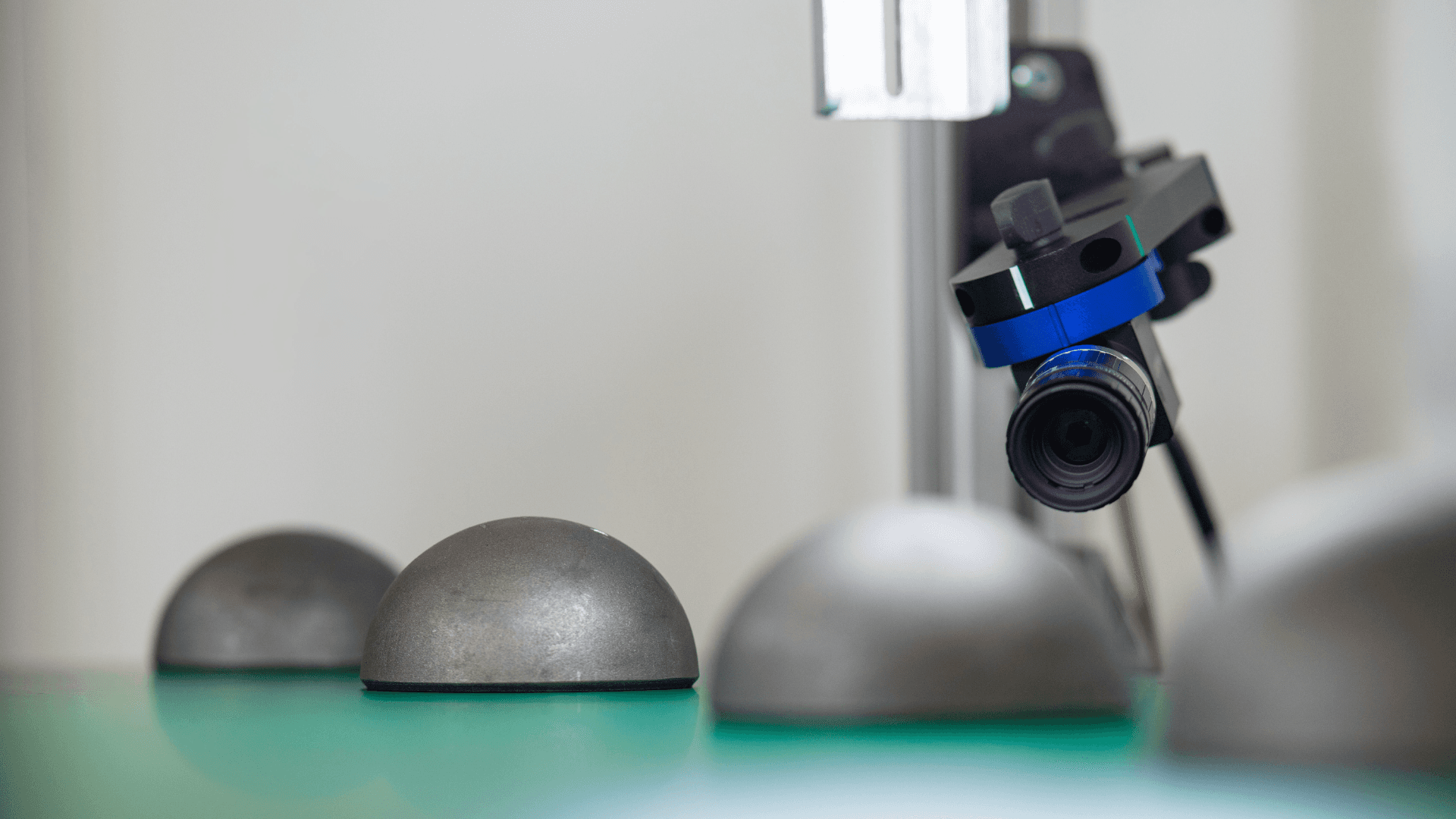
How to secure quality control of metal parts with AI
Published on
by
Scortex team
A metal part rejected by a customer rarely costs only the price of the part.
In automotive, cosmetics, packaging, luxury goods or machined technical parts, parts with surface treatment, an appearance defect detected too late can trigger a chain of consequences that is much heavier: line stoppage at the customer's site, emergency sorting, logistics returns, supplier strain, loss of quality confidence.
The problem is that many metal defects remain extremely difficult to stabilize in production. A slight scratch visible only from certain angles. An intermittent burr. A tool mark that appears on a few parts in the middle of a conforming batch. Or simply a surface variation that operators interpret differently depending on fatigue or lighting conditions.
On the shop floor, many manufacturers discover that the real challenge is not simply to “see” defects. It is to maintain a consistent quality decision at line speed, for hours, on metal parts that are sometimes shiny, complex, or highly variable.
It is precisely there that automated quality control systems with AI begin to transform traditional approaches to visual inspection.
Why defects on metal parts still get through production
In many factories, the most problematic defects are not necessarily the most visible.
Critical defects are often those that appear irregularly. One conforming part out of fifty. A fine scratch visible only under a certain reflection. A burr localized in a hard-to-reach area.
Manual inspection then becomes particularly demanding.
In some high-speed metal production lines, operators must inspect several hundred parts per hour while maintaining a constant level of vigilance. Even with experienced teams, this repetition mechanically creates variability.
Our clients regularly note it: some customer complaints do not stem from a lack of control, but from difficulty maintaining a consistent detection level over time.
This issue becomes even more critical on:
shiny metal parts,
polished or machined surfaces,
complex geometries,
parts with high aesthetic requirements.
The real problem: stabilizing the quality decision at line speed
We observe this across different industries: some automation projects run into difficulties because the initial problem was not always framed with enough precision from the outset.
The goal is not simply to add cameras to a production line.
The real challenge is to stabilize quality decisions in real industrial conditions:
lighting variations,
batch changes,
process drifts,
high speed,
parts that are slightly different from one another.
In several industrial environments, quality teams tell us they face a recurring difficulty: the defect exists, but its appearance keeps changing.
A scratch may seem deep on one part and then almost invisible on another depending on:
orientation,
surface condition,
material treatment,
or positioning under lighting.
That is precisely why traditional machine vision approaches sometimes reach their limits on metal.
Why classic vision systems often generate false rejects
Traditional vision systems generally work with fixed rules: contrast thresholds, contour comparison, pixel variations.
These approaches remain effective in very stable environments. But on complex metal parts, they quickly become sensitive to normal production variations.
In some industrial projects, teams then spend a lot of time adjusting vision parameters to avoid:
false rejects,
detection drift,
or throughput losses.
The paradox is well known in industry: a system that is too sensitive sometimes ends up disrupting production more than securing it.
Manufacturers then find themselves facing a delicate situation:
either reduce sensitivity and risk letting defects through,
or maintain very strict inspection at the cost of a high volume of false NOKs.
This is a particularly frequent difficulty in scratch detection on metal parts, because reflection variations can strongly disrupt approaches based solely on programmed rules.
What AI really changes in the inspection of metal parts
Industrial AI-based approaches do not seek only to apply additional rules.
They mainly aim to better distinguish what belongs to:
a normal production variation,
and a real anomaly.
In complex visual inspection projects, this difference is major.
Instead of manually programming every possible case, systems such as Spark from Scortex progressively learn the expected appearance of conforming parts. This makes it possible to better handle certain natural variations in material, texture, or finish.
This approach becomes particularly useful on metal parts:
machined,
brushed,
polished,
treated
or featuring complex reflections.
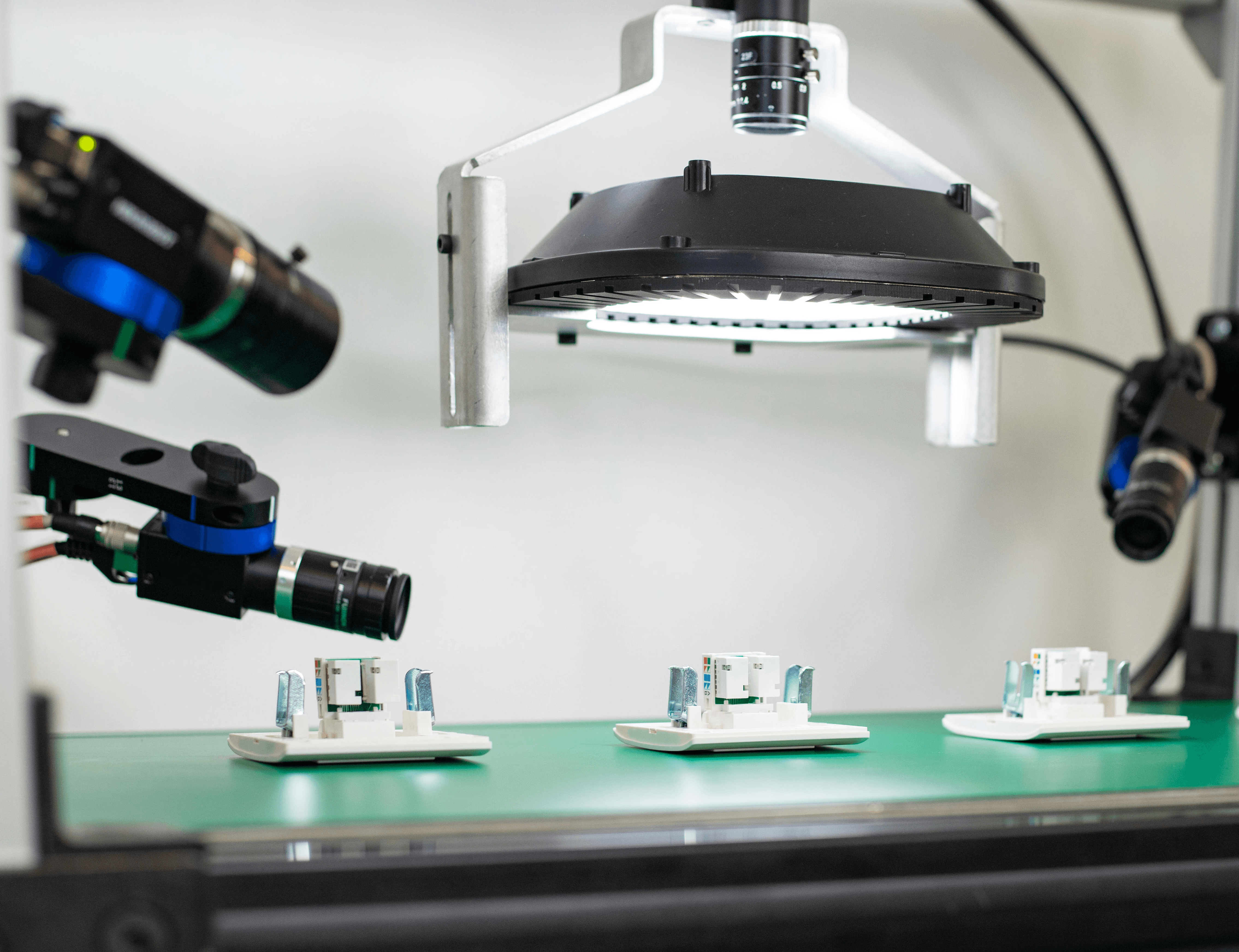
At our clients', our automated quality control solution with AI, Spark, is used to inspect several faces of a part simultaneously thanks to multi-camera architectures. The goal is not only to increase visual coverage, but above all to reduce blind spots where certain defects could go unnoticed.
What manufacturers really seek to avoid
On the shop floor, quality managers are not just looking for a “detection rate”.
They are mainly looking to reduce uncertainty.
Because every quality doubt leads to operational consequences:
over-inspection,
quarantines,
rework,
additional sorting,
production slowdowns,
tension between production and quality.
In some sectors, especially on metal parts with high aesthetic value, quality teams sometimes have to make very quick decisions on subtle defects under strong line-speed pressure.
Automated systems then bring an important benefit: standardizing the first level of decision and reducing dependence on human visual fatigue.
This does not replace the expertise of operators. On the contrary, it allows them to focus more on:
root cause analysis,
process drifts,
and continuous improvement.
Why some projects succeed over the long term
We observe this with our clients: the best-performing projects are not necessarily those that promise the highest theoretical performance.
They are often the ones that:
accept the reality of industrial variations,
strongly involve shop-floor quality teams,
build realistic decision criteria,
and progressively stabilize inspection over time.
The most advanced manufacturers now consider automated inspection as a tool for securing production overall.
Beyond detection itself, modern platforms, such as Spark's Quality Center, also make it possible to leverage quality data: time-stamped images, defect history, scrap trends, analysis of production drifts.
This information becomes valuable for sustainably reducing customer complaints and better understanding the root causes of defects on metal parts.
Securing quality control of metal parts therefore no longer consists solely in detecting visible defects. The challenge is now to make quality decisions more stable, more consistent and more usable in complex industrial environments
FAQ - Quality control of metal parts
How can shiny metal parts be inspected without slowing production?
Shiny metal parts often require several lighting and imaging angles to make defect detection reliable. Modern inspection systems make it possible to maintain control at line speed without multiplying operator handling.
Why do some scratches get through despite quality control in place?
Some scratches appear only at precise angles or under certain lighting conditions. At line speed, the repetitiveness and variability of the parts also make it harder to maintain consistent detection throughout an entire production run.
What defects can an automated quality control system detect on metal?
Depending on the industrial setup, systems can detect:
· scratches,
· burrs,
· impacts,
· tool marks,
· finish defects
· or surface contamination.
Their appearance can vary depending on the surface condition, part orientation, or light.
Here are other articles you may be interested in:
Detection of production defects on automotive metal parts
Discover Spark, AI quality control solution
Quality Defect Library: what is it for?
How to secure quality control of metal parts with AI
Published on
by
Scortex team
A metal part rejected by a customer rarely costs only the price of the part.
In automotive, cosmetics, packaging, luxury goods or machined technical parts, parts with surface treatment, an appearance defect detected too late can trigger a chain of consequences that is much heavier: line stoppage at the customer's site, emergency sorting, logistics returns, supplier strain, loss of quality confidence.
The problem is that many metal defects remain extremely difficult to stabilize in production. A slight scratch visible only from certain angles. An intermittent burr. A tool mark that appears on a few parts in the middle of a conforming batch. Or simply a surface variation that operators interpret differently depending on fatigue or lighting conditions.
On the shop floor, many manufacturers discover that the real challenge is not simply to “see” defects. It is to maintain a consistent quality decision at line speed, for hours, on metal parts that are sometimes shiny, complex, or highly variable.
It is precisely there that automated quality control systems with AI begin to transform traditional approaches to visual inspection.
Why defects on metal parts still get through production
In many factories, the most problematic defects are not necessarily the most visible.
Critical defects are often those that appear irregularly. One conforming part out of fifty. A fine scratch visible only under a certain reflection. A burr localized in a hard-to-reach area.
Manual inspection then becomes particularly demanding.
In some high-speed metal production lines, operators must inspect several hundred parts per hour while maintaining a constant level of vigilance. Even with experienced teams, this repetition mechanically creates variability.
Our clients regularly note it: some customer complaints do not stem from a lack of control, but from difficulty maintaining a consistent detection level over time.
This issue becomes even more critical on:
shiny metal parts,
polished or machined surfaces,
complex geometries,
parts with high aesthetic requirements.
The real problem: stabilizing the quality decision at line speed
We observe this across different industries: some automation projects run into difficulties because the initial problem was not always framed with enough precision from the outset.
The goal is not simply to add cameras to a production line.
The real challenge is to stabilize quality decisions in real industrial conditions:
lighting variations,
batch changes,
process drifts,
high speed,
parts that are slightly different from one another.
In several industrial environments, quality teams tell us they face a recurring difficulty: the defect exists, but its appearance keeps changing.
A scratch may seem deep on one part and then almost invisible on another depending on:
orientation,
surface condition,
material treatment,
or positioning under lighting.
That is precisely why traditional machine vision approaches sometimes reach their limits on metal.
Why classic vision systems often generate false rejects
Traditional vision systems generally work with fixed rules: contrast thresholds, contour comparison, pixel variations.
These approaches remain effective in very stable environments. But on complex metal parts, they quickly become sensitive to normal production variations.
In some industrial projects, teams then spend a lot of time adjusting vision parameters to avoid:
false rejects,
detection drift,
or throughput losses.
The paradox is well known in industry: a system that is too sensitive sometimes ends up disrupting production more than securing it.
Manufacturers then find themselves facing a delicate situation:
either reduce sensitivity and risk letting defects through,
or maintain very strict inspection at the cost of a high volume of false NOKs.
This is a particularly frequent difficulty in scratch detection on metal parts, because reflection variations can strongly disrupt approaches based solely on programmed rules.
What AI really changes in the inspection of metal parts
Industrial AI-based approaches do not seek only to apply additional rules.
They mainly aim to better distinguish what belongs to:
a normal production variation,
and a real anomaly.
In complex visual inspection projects, this difference is major.
Instead of manually programming every possible case, systems such as Spark from Scortex progressively learn the expected appearance of conforming parts. This makes it possible to better handle certain natural variations in material, texture, or finish.
This approach becomes particularly useful on metal parts:
machined,
brushed,
polished,
treated
or featuring complex reflections.
At our clients', our automated quality control solution with AI, Spark, is used to inspect several faces of a part simultaneously thanks to multi-camera architectures. The goal is not only to increase visual coverage, but above all to reduce blind spots where certain defects could go unnoticed.
What manufacturers really seek to avoid
On the shop floor, quality managers are not just looking for a “detection rate”.
They are mainly looking to reduce uncertainty.
Because every quality doubt leads to operational consequences:
over-inspection,
quarantines,
rework,
additional sorting,
production slowdowns,
tension between production and quality.
In some sectors, especially on metal parts with high aesthetic value, quality teams sometimes have to make very quick decisions on subtle defects under strong line-speed pressure.
Automated systems then bring an important benefit: standardizing the first level of decision and reducing dependence on human visual fatigue.
This does not replace the expertise of operators. On the contrary, it allows them to focus more on:
root cause analysis,
process drifts,
and continuous improvement.
Why some projects succeed over the long term
We observe this with our clients: the best-performing projects are not necessarily those that promise the highest theoretical performance.
They are often the ones that:
accept the reality of industrial variations,
strongly involve shop-floor quality teams,
build realistic decision criteria,
and progressively stabilize inspection over time.
The most advanced manufacturers now consider automated inspection as a tool for securing production overall.
Beyond detection itself, modern platforms, such as Spark's Quality Center, also make it possible to leverage quality data: time-stamped images, defect history, scrap trends, analysis of production drifts.
This information becomes valuable for sustainably reducing customer complaints and better understanding the root causes of defects on metal parts.
Securing quality control of metal parts therefore no longer consists solely in detecting visible defects. The challenge is now to make quality decisions more stable, more consistent and more usable in complex industrial environments
FAQ - Quality control of metal parts
How can shiny metal parts be inspected without slowing production?
Shiny metal parts often require several lighting and imaging angles to make defect detection reliable. Modern inspection systems make it possible to maintain control at line speed without multiplying operator handling.
Why do some scratches get through despite quality control in place?
Some scratches appear only at precise angles or under certain lighting conditions. At line speed, the repetitiveness and variability of the parts also make it harder to maintain consistent detection throughout an entire production run.
What defects can an automated quality control system detect on metal?
Depending on the industrial setup, systems can detect:
· scratches,
· burrs,
· impacts,
· tool marks,
· finish defects
· or surface contamination.
Their appearance can vary depending on the surface condition, part orientation, or light.
Here are other articles you may be interested in:
Detection of production defects on automotive metal parts
Discover Spark, AI quality control solution
Quality Defect Library: what is it for?
Let's discuss your quality today.

Scortex team is happy to answer your questions.
Let's discuss your quality today.
Scortex team is happy to answer your questions.

Join our newsletter
Some visuals on this site were generated using AI.
Join our newsletter
Some visuals on this site were generated using AI.