
How Saverglass makes the inspection of its premium bottles reliable thanks to Scortex's AI
Published on
by
Scortex Team
The French benchmark for exceptional glass for nearly 130 years, Saverglass manufactures bottles for the premium and ultra-premium wine and spirits markets. On its production lines, more than 130 bottles file past every minute. In this demanding environment, maintaining a constant level of detection is a challenge in its own right.
In the premium glass industry, inspecting is not the most difficult part. Maintaining the same level of requirements throughout production is.
At Saverglass, quality control is already a historic practice. The entirety of production is inspected. However, the company identified a major challenge: guaranteeing constant detection of defects despite the duration of production cycles and field constraints.
« We have been inspecting 100% of our production for a long time. The topic was not to do more, but to do better », explains Frédéric Dupuis, Research and Development Director at Saverglass.
Bottles circulate at more than 130 pieces per minute.
In this environment, certain defects can be particularly complex to detect identically over several hours:
appearance defects,
bubbles,
material defects
or even surface defects.
Visual inspection of glass presents specific difficulties. The transparency of the material alters the way light propagates through the piece and can make certain anomalies more difficult to perceive.
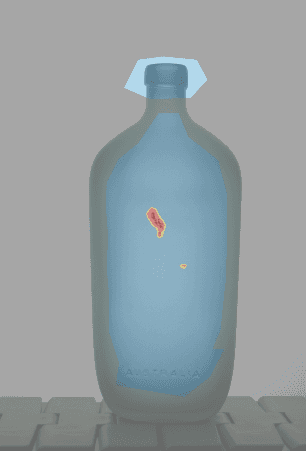
« With certain anomalies, we know that human detection can vary. It is not a matter of competence, it is a matter of repetition and conditions. » explains Frédéric Dupuis.
Saverglass's objective was not to replace operators but to bring more stability to the detection process while reducing the strain associated with repetitive tasks.
To meet this need, the company deployed Spark, the solution developed by Scortex after more than ten years of research and development in artificial intelligence applied to quality control.
Two Spark stations, each equipped with two cameras, were integrated directly onto the line in order to analyze each bottle in real-time.
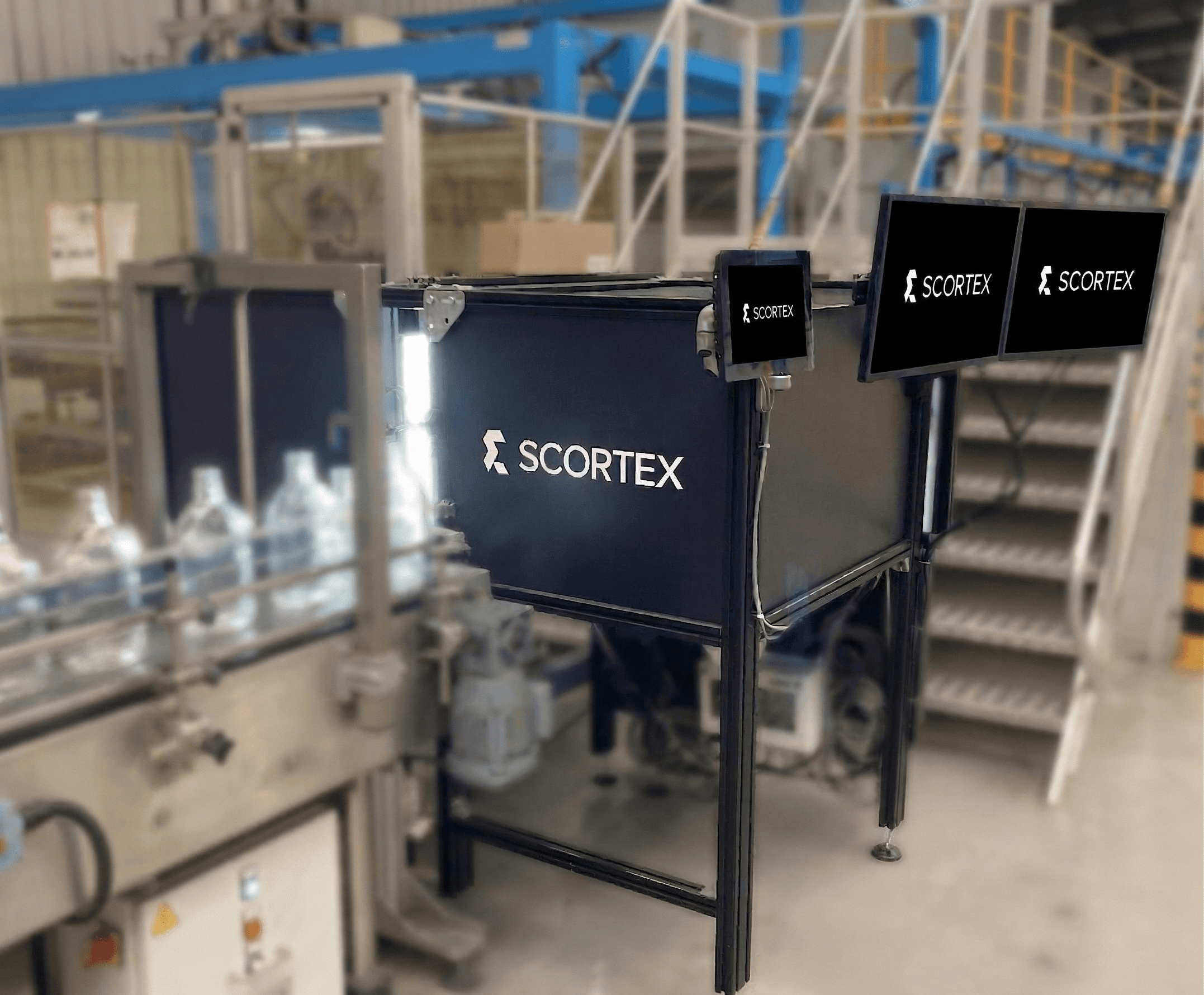
Production constraints do not stop at the defects themselves. References are numerous and series changes are frequent. Dimensions and formats evolve regularly according to the products manufactured over the weeks.
« We have many references. Series changes are frequent. We needed a solution capable of keeping pace with this rhythm without complicating operations. » indicates Frédéric Dupuis.
The AI-based approach makes it possible to accommodate this variability without multiplying complex configurations at each reference change.
Beyond detection, the main benefit observed concerns the consistency of the inspection.
« What we were looking for was consistency. To be able to detect defects with the same level of requirements throughout production. » states Frédéric Dupuis.
This quest for stability is now becoming a central challenge for many manufacturers faced with high speeds, a high diversity of products, and ever stricter quality requirements.
Beyond defect detection, Saverglass was looking above all for greater consistency in its quality control.
Thanks to Spark and the expertise developed by Scortex for over ten years in artificial intelligence applied to industrial inspection, the company now has a system capable of supporting the variability of its production while maintaining a stable detection level.
How Saverglass makes the inspection of its premium bottles reliable thanks to Scortex's AI
Published on
by
Scortex Team
The French benchmark for exceptional glass for nearly 130 years, Saverglass manufactures bottles for the premium and ultra-premium wine and spirits markets. On its production lines, more than 130 bottles file past every minute. In this demanding environment, maintaining a constant level of detection is a challenge in its own right.
In the premium glass industry, inspecting is not the most difficult part. Maintaining the same level of requirements throughout production is.
At Saverglass, quality control is already a historic practice. The entirety of production is inspected. However, the company identified a major challenge: guaranteeing constant detection of defects despite the duration of production cycles and field constraints.
« We have been inspecting 100% of our production for a long time. The topic was not to do more, but to do better », explains Frédéric Dupuis, Research and Development Director at Saverglass.
Bottles circulate at more than 130 pieces per minute.
In this environment, certain defects can be particularly complex to detect identically over several hours:
appearance defects,
bubbles,
material defects
or even surface defects.
Visual inspection of glass presents specific difficulties. The transparency of the material alters the way light propagates through the piece and can make certain anomalies more difficult to perceive.
« With certain anomalies, we know that human detection can vary. It is not a matter of competence, it is a matter of repetition and conditions. » explains Frédéric Dupuis.
Saverglass's objective was not to replace operators but to bring more stability to the detection process while reducing the strain associated with repetitive tasks.
To meet this need, the company deployed Spark, the solution developed by Scortex after more than ten years of research and development in artificial intelligence applied to quality control.
Two Spark stations, each equipped with two cameras, were integrated directly onto the line in order to analyze each bottle in real-time.
Production constraints do not stop at the defects themselves. References are numerous and series changes are frequent. Dimensions and formats evolve regularly according to the products manufactured over the weeks.
« We have many references. Series changes are frequent. We needed a solution capable of keeping pace with this rhythm without complicating operations. » indicates Frédéric Dupuis.
The AI-based approach makes it possible to accommodate this variability without multiplying complex configurations at each reference change.
Beyond detection, the main benefit observed concerns the consistency of the inspection.
« What we were looking for was consistency. To be able to detect defects with the same level of requirements throughout production. » states Frédéric Dupuis.
This quest for stability is now becoming a central challenge for many manufacturers faced with high speeds, a high diversity of products, and ever stricter quality requirements.
Beyond defect detection, Saverglass was looking above all for greater consistency in its quality control.
Thanks to Spark and the expertise developed by Scortex for over ten years in artificial intelligence applied to industrial inspection, the company now has a system capable of supporting the variability of its production while maintaining a stable detection level.
Let's discuss your quality today.
Scortex team is happy to answer your questions.
Let's discuss your quality today.
Scortex team is happy to answer your questions.

Join our newsletter
Some visuals on this site were generated using AI.
Join our newsletter
Some visuals on this site were generated using AI.