Automate quality control of injection-molded plastic parts with AI
Published on
by
Scortex team
Aspect defects never give warning. A flash appears suddenly after several hours of production. A flow mark becomes visible only from certain angles. A slight burn slips through at the end of the shift because of visual fatigue. And when a drift is detected too late, sometimes thousands of parts have to be sorted or scrapped.
The problem is not new. What changes today is the level of demand placed on manufacturers: reduced customer complaints, quality stability across teams, traceability of decisions, and inspection of increasingly aesthetic or complex parts. In this context, manual inspection alone quickly reaches its limits.
AI visual inspection opens up a new approach to quality control for injection-molded parts. Not by removing the role of quality operators, but by providing more consistent, more traceable detection that is better suited to real production variations. This article explains concretely how manufacturers today automate quality control of their injection-molded parts using AI, what results they obtain, and what mistakes to avoid during deployment.
Why quality control of injection-molded parts remains difficult to stabilize
Injection molding combines several sources of variability that make visual inspection much more difficult.
Defects are not always dimensional. Many are purely aesthetic or material-related:
flash,
short shots,
burn marks,
cracks,
flow marks,
scratches,
partial occlusions,
gloss variations.
These defects can appear gradually because of:
thermal drift,
mold wear,
a material change,
or slight process misalignment.
On the shop floor, operators often have to make decisions at high speed on parts whose appearance varies naturally. A slight difference in texture may be acceptable on one part and critical on another depending on its function or its visibility to the end customer.
It is precisely this gray area that makes manual inspection difficult to standardize.
In many factories, quality specifications remain partial or implicit. Operators learn “by eye,” through hands-on transfer, without truly formalized visual criteria.
The result is well known:
decision variability,
false rejects,
escapes,
tensions between quality and production,
and difficulty stabilizing scrap rates.
Why conventional industrial vision quickly reaches its limits
Traditional vision systems work with fixed rules. They look for a precise pattern defined in advance.
This approach works well for simple applications:
presence/absence,
repeatable geometric inspection,
verification of standardized components.
But in injection molding, the shop-floor reality is more complex.
Parts often present:
irregular textures,
new or hard-to-detect defects
non-flat geometries,
Classical systems then become sensitive to the slightest change in lighting or positioning.
AI works differently.
Instead of searching for a specific defect, Spark learns what a conforming part is from a set of good parts. When a new part is inspected, the AI measures its visual deviation from that normality.
This approach is particularly suited to injection molding, where defects often evolve as progressive drifts rather than binary events.
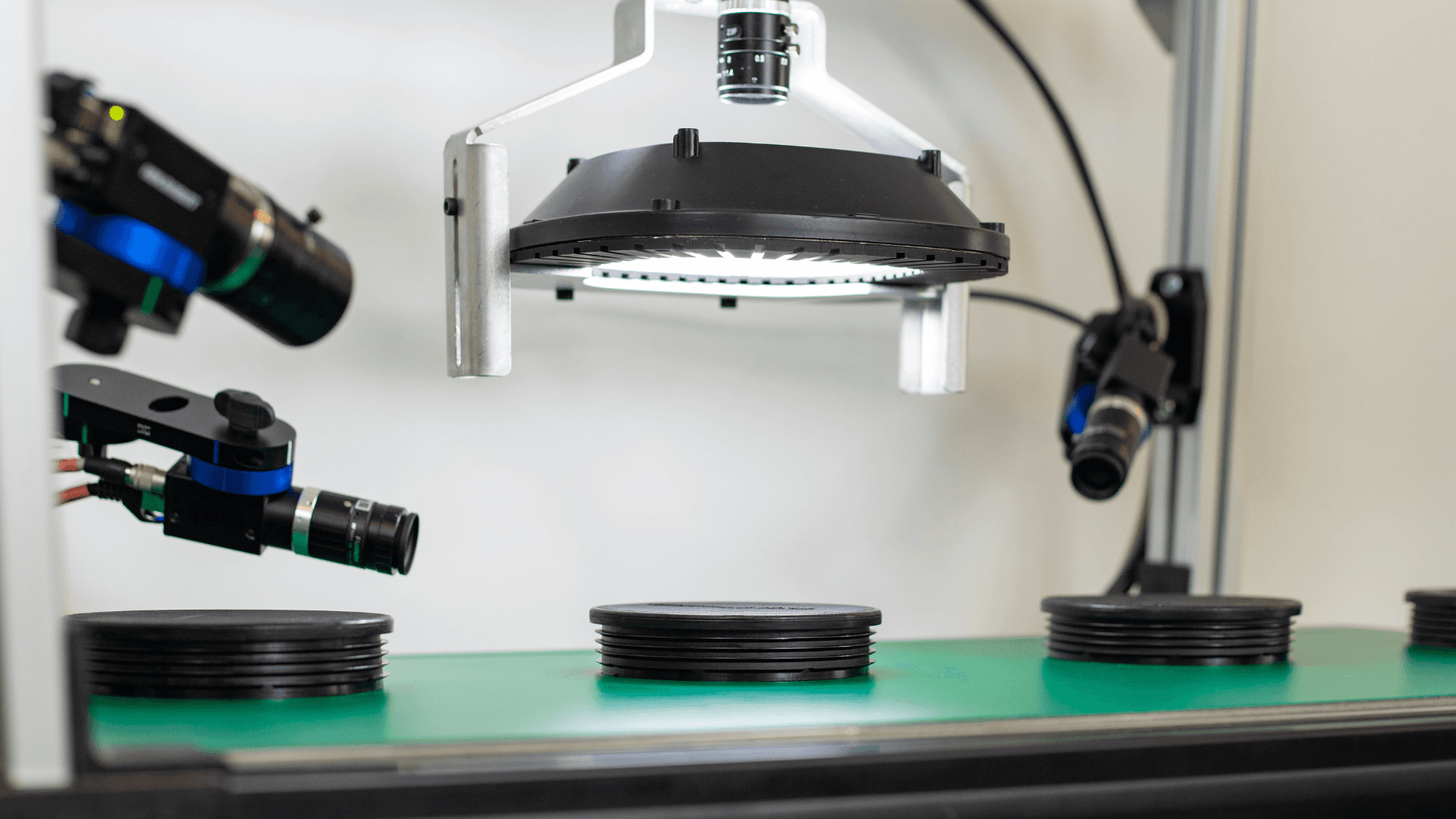
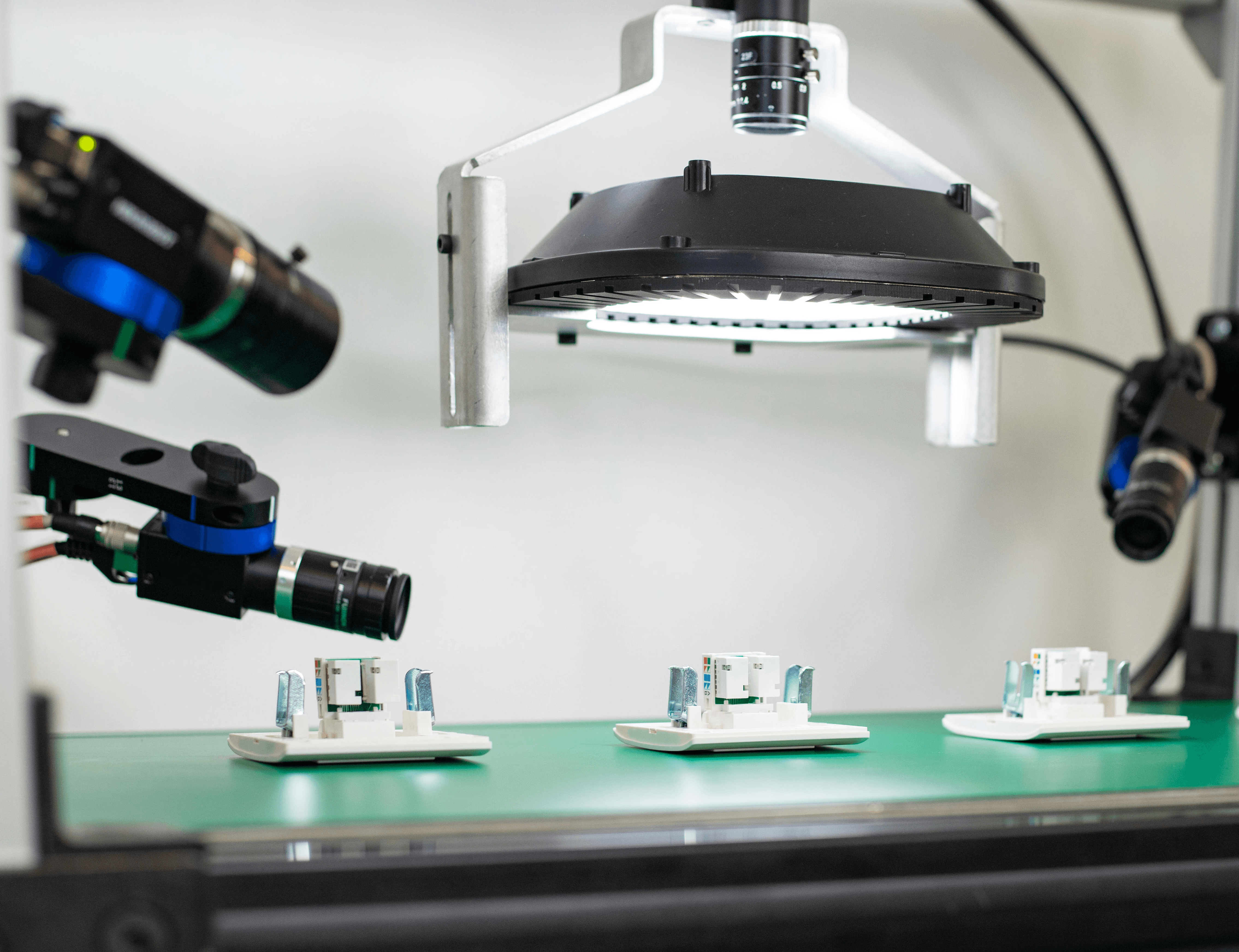
To make injection molding inspection on these parts reliable, Spark from Scortex relies on several levers:
Multiple viewing angles with an installation of up to 4 cameras,
Independent camera positioning,
Suitable lighting,
learning enriched on different acceptable variations.
This Spark MultiView approach makes it possible in particular to:
cover hidden areas,
adapt sensitivity according to the inspected faces,
and avoid a reflection being interpreted as a critical defect.
The real challenge: detecting process drifts earlier
Automating quality control makes it possible to detect drifts more quickly and more objectively.
This is an essential distinction.
In many factories, defects are discovered after several dozen minutes, sometimes after several hours of production. In the meantime:
scrap accumulates,
lots must be sorted,
costs increase,
and the causes become difficult to identify.
With Spark from Scortex and the Quality Center, manufacturers can track:
the rejection rate in real time,
abnormal spikes,
recurrent defect areas via heatmaps,
and drift trends over time.
In some cases, these analyses made it possible to identify:
supplier material issues,
temperature drifts,
or tooling-related defects.
Quality control then becomes a process steering tool, rather than just an output filter.
Why quality teams remain at the center of the system
One common mistake in AI projects is to think that the machine will automatically replace human judgment.
In reality, the best results appear when quality teams are involved from the start:
selection of training parts,
definition of sensitivity thresholds,
validation of edge cases,
continuous dataset enrichment.
This involvement makes it possible to greatly reduce:
false positives,
escapes,
and calibration inconsistencies.
At one of our customers, a manufacturer of automotive injection-molded parts, reworking the annotations with the quality teams made it possible to reduce the false positive rate from 65% to 25%, without changing the AI model.
AI alone is therefore not enough. Performance comes from the combination of technology and shop-floor expertise.
What needs to be prepared before automating
A quality control project for injection-molded parts does not start with installing cameras.
The most robust projects first go through:
a feasibility study on real parts,
an analysis of the existing inspection,
a clarification of quality criteria,
and a realistic definition of expectations.
Automation often brings to light a deeper problem: the absence of a truly shared quality standard.
Some companies then discover that their initial criteria are impossible to maintain industrially. Others formalize for the first time their critical, major or tolerated defects.
This phase is essential.
FAQ – Quality control of injection-molded parts and AI
What defects can AI detect in injection molding?
AI can detect
flash,
short shots,
burn marks,
cracks,
flow marks,
scratches,
occlusions
or gloss variations on molded parts.
Why are injection-molded parts difficult to inspect?
Injection-molded parts are difficult to inspect because their appearance naturally varies depending on the material, reflections, or production conditions, while appearance defects often remain very subtle. An AI visual inspection technology like Spark makes it possible to better manage this variability and make anomaly detection reliable at industrial speed.
Why do defects in injection molding appear irregularly?
Because they are often linked to evolving process drifts: temperature, material, injection pressure, or mold wear. AI visual inspection makes it possible to detect these variations earlier before they impact entire runs.
Why do shiny plastic parts pose a problem in quality control?
Reflections mask or amplify certain defects depending on the viewing angle and lighting. A multi-angle AI approach, such as the one offered by Spark from Scortex, makes it possible to better distinguish a simple reflection from a real anomaly.
Here are other articles that might interest you:
· Automated quality control by AI: automotive industry
· AI defect detection on automotive plastic parts
· Spak and Spark Multi View, two solutions for flawless quality control, with AI
Automate quality control of injection-molded plastic parts with AI
Published on
by
Scortex team
Aspect defects never give warning. A flash appears suddenly after several hours of production. A flow mark becomes visible only from certain angles. A slight burn slips through at the end of the shift because of visual fatigue. And when a drift is detected too late, sometimes thousands of parts have to be sorted or scrapped.
The problem is not new. What changes today is the level of demand placed on manufacturers: reduced customer complaints, quality stability across teams, traceability of decisions, and inspection of increasingly aesthetic or complex parts. In this context, manual inspection alone quickly reaches its limits.
AI visual inspection opens up a new approach to quality control for injection-molded parts. Not by removing the role of quality operators, but by providing more consistent, more traceable detection that is better suited to real production variations. This article explains concretely how manufacturers today automate quality control of their injection-molded parts using AI, what results they obtain, and what mistakes to avoid during deployment.
Why quality control of injection-molded parts remains difficult to stabilize
Injection molding combines several sources of variability that make visual inspection much more difficult.
Defects are not always dimensional. Many are purely aesthetic or material-related:
flash,
short shots,
burn marks,
cracks,
flow marks,
scratches,
partial occlusions,
gloss variations.
These defects can appear gradually because of:
thermal drift,
mold wear,
a material change,
or slight process misalignment.
On the shop floor, operators often have to make decisions at high speed on parts whose appearance varies naturally. A slight difference in texture may be acceptable on one part and critical on another depending on its function or its visibility to the end customer.
It is precisely this gray area that makes manual inspection difficult to standardize.
In many factories, quality specifications remain partial or implicit. Operators learn “by eye,” through hands-on transfer, without truly formalized visual criteria.
The result is well known:
decision variability,
false rejects,
escapes,
tensions between quality and production,
and difficulty stabilizing scrap rates.
Why conventional industrial vision quickly reaches its limits
Traditional vision systems work with fixed rules. They look for a precise pattern defined in advance.
This approach works well for simple applications:
presence/absence,
repeatable geometric inspection,
verification of standardized components.
But in injection molding, the shop-floor reality is more complex.
Parts often present:
irregular textures,
new or hard-to-detect defects
non-flat geometries,
Classical systems then become sensitive to the slightest change in lighting or positioning.
AI works differently.
Instead of searching for a specific defect, Spark learns what a conforming part is from a set of good parts. When a new part is inspected, the AI measures its visual deviation from that normality.
This approach is particularly suited to injection molding, where defects often evolve as progressive drifts rather than binary events.
To make injection molding inspection on these parts reliable, Spark from Scortex relies on several levers:
Multiple viewing angles with an installation of up to 4 cameras,
Independent camera positioning,
Suitable lighting,
learning enriched on different acceptable variations.
This Spark MultiView approach makes it possible in particular to:
cover hidden areas,
adapt sensitivity according to the inspected faces,
and avoid a reflection being interpreted as a critical defect.
The real challenge: detecting process drifts earlier
Automating quality control makes it possible to detect drifts more quickly and more objectively.
This is an essential distinction.
In many factories, defects are discovered after several dozen minutes, sometimes after several hours of production. In the meantime:
scrap accumulates,
lots must be sorted,
costs increase,
and the causes become difficult to identify.
With Spark from Scortex and the Quality Center, manufacturers can track:
the rejection rate in real time,
abnormal spikes,
recurrent defect areas via heatmaps,
and drift trends over time.
In some cases, these analyses made it possible to identify:
supplier material issues,
temperature drifts,
or tooling-related defects.
Quality control then becomes a process steering tool, rather than just an output filter.
Why quality teams remain at the center of the system
One common mistake in AI projects is to think that the machine will automatically replace human judgment.
In reality, the best results appear when quality teams are involved from the start:
selection of training parts,
definition of sensitivity thresholds,
validation of edge cases,
continuous dataset enrichment.
This involvement makes it possible to greatly reduce:
false positives,
escapes,
and calibration inconsistencies.
At one of our customers, a manufacturer of automotive injection-molded parts, reworking the annotations with the quality teams made it possible to reduce the false positive rate from 65% to 25%, without changing the AI model.
AI alone is therefore not enough. Performance comes from the combination of technology and shop-floor expertise.
What needs to be prepared before automating
A quality control project for injection-molded parts does not start with installing cameras.
The most robust projects first go through:
a feasibility study on real parts,
an analysis of the existing inspection,
a clarification of quality criteria,
and a realistic definition of expectations.
Automation often brings to light a deeper problem: the absence of a truly shared quality standard.
Some companies then discover that their initial criteria are impossible to maintain industrially. Others formalize for the first time their critical, major or tolerated defects.
This phase is essential.
FAQ – Quality control of injection-molded parts and AI
What defects can AI detect in injection molding?
AI can detect
flash,
short shots,
burn marks,
cracks,
flow marks,
scratches,
occlusions
or gloss variations on molded parts.
Why are injection-molded parts difficult to inspect?
Injection-molded parts are difficult to inspect because their appearance naturally varies depending on the material, reflections, or production conditions, while appearance defects often remain very subtle. An AI visual inspection technology like Spark makes it possible to better manage this variability and make anomaly detection reliable at industrial speed.
Why do defects in injection molding appear irregularly?
Because they are often linked to evolving process drifts: temperature, material, injection pressure, or mold wear. AI visual inspection makes it possible to detect these variations earlier before they impact entire runs.
Why do shiny plastic parts pose a problem in quality control?
Reflections mask or amplify certain defects depending on the viewing angle and lighting. A multi-angle AI approach, such as the one offered by Spark from Scortex, makes it possible to better distinguish a simple reflection from a real anomaly.
Here are other articles that might interest you:
· Automated quality control by AI: automotive industry
· AI defect detection on automotive plastic parts
· Spak and Spark Multi View, two solutions for flawless quality control, with AI
Let's discuss your quality today.

Scortex team is happy to answer your questions.
Let's discuss your quality today.
Scortex team is happy to answer your questions.

Join our newsletter
Some visuals on this site were generated using AI.
Join our newsletter
Some visuals on this site were generated using AI.