
Yann Chéné, when research meets industry
At Scortex since 2019, Yann Chéné is a researcher solving real-world field problems. With a PhD in image processing, now machine learning engineer, he explores every day this demanding point of balance between scientific advancement and industrial reality.
1. When did you join Scortex and what is your role today?
I have a PhD in image processing. I joined Scortex in 2019 as a vision and image processing engineer.
Today, I hold a position as a machine learning engineer. My role has evolved alongside the technology itself: I now work mainly on machine learning models and their continuous improvement.
2. What does a typical day look like for you, and what are your key missions?
My work is structured around four main axes.
First, the construction of datasets based on real customer cases. These are much more complex datasets than those available in academic research because they reflect concrete industrial situations.
Next, constant scientific monitoring: analyzing publications, identifying relevant innovations, evaluating what can be applied to our context.
Then comes the experimentation phase. I implement these approaches, potentially improve them, launch test campaigns, and analyze the results.
Finally, there is integration: transforming these advancements into concrete features in Spark, in close collaboration with the software teams.
The challenge is twofold: staying at the forefront of innovation while ensuring that each advancement meets a real customer need.
3. After these seven years at Scortex, what has enabled the company to become a pioneer in AI applied to quality control?
From the very beginning, the founders made a structuring choice: to integrate deep learning into visual quality control.
Before that, systems relied on successive algorithmic chains. Each use case required a specific combination of processes: segmentation, detection, classification... a fragmented approach that was difficult to generalize and scale.
At Scortex, we adopted a different approach: deep learning models capable of abstracting all of these steps and directly producing a defect probability.
We then continued on this path by integrating anomaly detection starting in 2021.
4. A milestone, a unique experience to share?
My career transition.
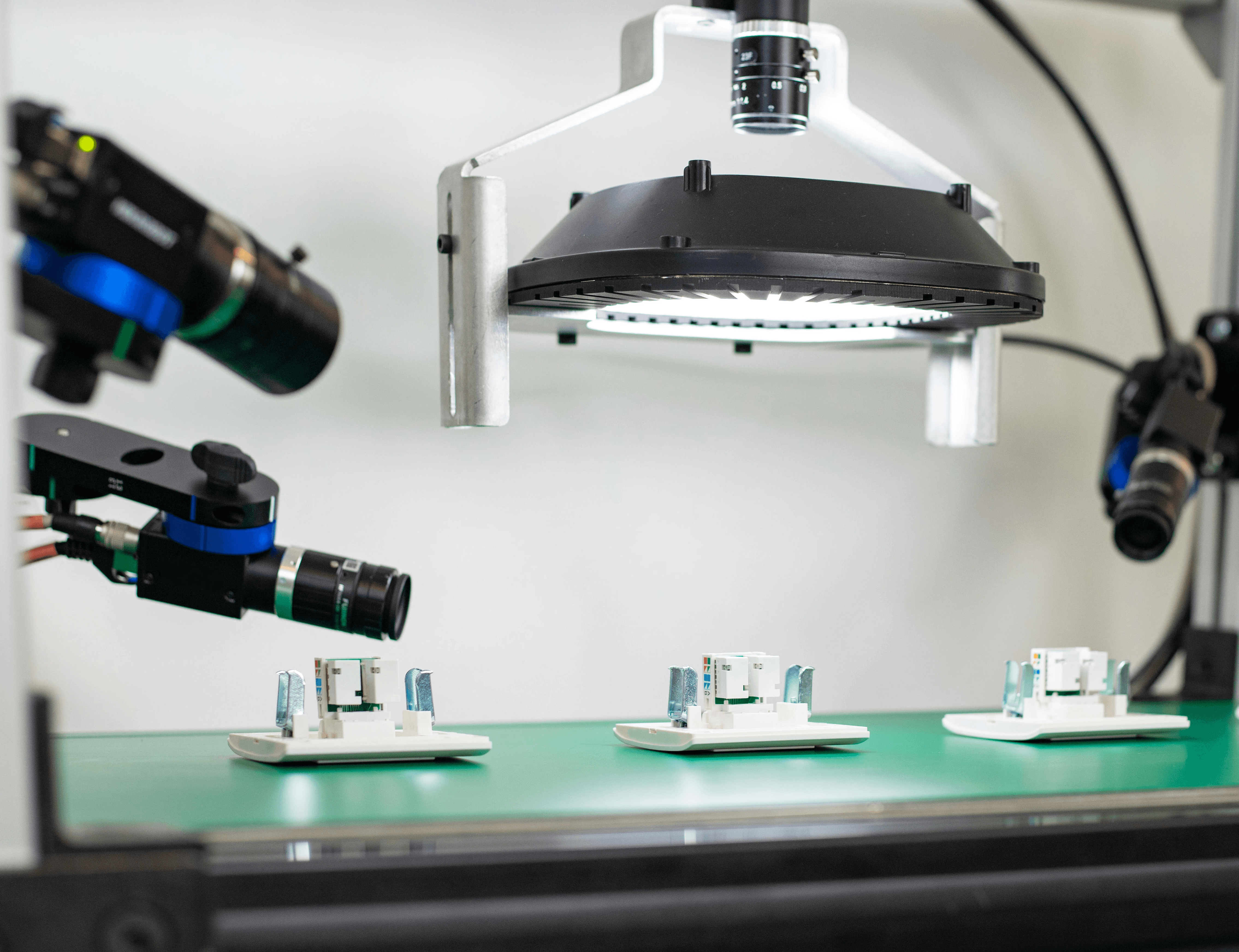
Initially, I designed complete vision systems, sometimes very complex ones, integrating up to fifteen cameras, with issues related to lighting, pre-processing, and post-processing.
Since 2021, I have dedicated myself entirely to machine learning. It is a shift toward more research and experimentation. Another way of approaching problems, more abstract, but always anchored in reality.
5. What has your expertise made a difference in over the years?
Industry presents concrete problems but requires robust, exploitable, and maintainable solutions.
My expertise has been forged in this context in order to transform theoretical advancements into operational solutions.
6. What are you most proud of in what you have collectively built?
Of this deep understanding of industrial constraints.
This proximity between our teams, industrialists, and research allows us to develop solutions aligned with true production challenges: quality requirements, product variability, production pace, and operational constraints.
At Scortex, we are skilled to integrate this complexity. Evolving Spark, our automated AI-powered quality control solution, in this direction to fix concrete industrial issues is particularly rewarding.
7. Looking to the future, how do you see AI applied to quality control evolving?
The future lies in the integration of quality knowledge.
Quality departments possess a pile of information: defect histories, acceptance criteria, and historical decisions. This knowledge is still underutilized by systems.
Tomorrow, the challenge will be to leverage this information in order to improve the machine understanding and the overall quality decisions.
This will also involve giving more control to users: allowing them to adjust, enrich, and evolve this knowledge over time.
This continuous interaction between human and machine will push us toward the next stage of automated quality control.
Yann Chéné, when research meets industry
At Scortex since 2019, Yann Chéné is a researcher solving real-world field problems. With a PhD in image processing, now machine learning engineer, he explores every day this demanding point of balance between scientific advancement and industrial reality.
1. When did you join Scortex and what is your role today?
I have a PhD in image processing. I joined Scortex in 2019 as a vision and image processing engineer.
Today, I hold a position as a machine learning engineer. My role has evolved alongside the technology itself: I now work mainly on machine learning models and their continuous improvement.
2. What does a typical day look like for you, and what are your key missions?
My work is structured around four main axes.
First, the construction of datasets based on real customer cases. These are much more complex datasets than those available in academic research because they reflect concrete industrial situations.
Next, constant scientific monitoring: analyzing publications, identifying relevant innovations, evaluating what can be applied to our context.
Then comes the experimentation phase. I implement these approaches, potentially improve them, launch test campaigns, and analyze the results.
Finally, there is integration: transforming these advancements into concrete features in Spark, in close collaboration with the software teams.
The challenge is twofold: staying at the forefront of innovation while ensuring that each advancement meets a real customer need.
3. After these seven years at Scortex, what has enabled the company to become a pioneer in AI applied to quality control?
From the very beginning, the founders made a structuring choice: to integrate deep learning into visual quality control.
Before that, systems relied on successive algorithmic chains. Each use case required a specific combination of processes: segmentation, detection, classification... a fragmented approach that was difficult to generalize and scale.
At Scortex, we adopted a different approach: deep learning models capable of abstracting all of these steps and directly producing a defect probability.
We then continued on this path by integrating anomaly detection starting in 2021.
4. A milestone, a unique experience to share?
My career transition.
Initially, I designed complete vision systems, sometimes very complex ones, integrating up to fifteen cameras, with issues related to lighting, pre-processing, and post-processing.
Since 2021, I have dedicated myself entirely to machine learning. It is a shift toward more research and experimentation. Another way of approaching problems, more abstract, but always anchored in reality.
5. What has your expertise made a difference in over the years?
Industry presents concrete problems but requires robust, exploitable, and maintainable solutions.
My expertise has been forged in this context in order to transform theoretical advancements into operational solutions.
6. What are you most proud of in what you have collectively built?
Of this deep understanding of industrial constraints.
This proximity between our teams, industrialists, and research allows us to develop solutions aligned with true production challenges: quality requirements, product variability, production pace, and operational constraints.
At Scortex, we are skilled to integrate this complexity. Evolving Spark, our automated AI-powered quality control solution, in this direction to fix concrete industrial issues is particularly rewarding.
7. Looking to the future, how do you see AI applied to quality control evolving?
The future lies in the integration of quality knowledge.
Quality departments possess a pile of information: defect histories, acceptance criteria, and historical decisions. This knowledge is still underutilized by systems.
Tomorrow, the challenge will be to leverage this information in order to improve the machine understanding and the overall quality decisions.
This will also involve giving more control to users: allowing them to adjust, enrich, and evolve this knowledge over time.
This continuous interaction between human and machine will push us toward the next stage of automated quality control.
Let's discuss your quality today.

Scortex team is happy to answer your questions.
Let's discuss your quality today.
Scortex team is happy to answer your questions.

Join our newsletter
Some visuals on this site were generated using AI.
Join our newsletter
Some visuals on this site were generated using AI.