
Nathanaël Hania, at the heart of the Scortex adventure since day one
Co-founder of Scortex, Nathanaël has seen the company evolve from a young tech startup to a recognized player in automated quality control. A decade marked by technical challenges, strategic pivots and the same ambition: to help manufacturers better control their quality.
1. When did you join Scortex and what is your role today?
I joined Scortex in 2016. I am one of the founders of the company.
Since the beginning of the adventure, I have held several positions, always linked to the technical aspects of the company. I participated in the design of the first products, their deployment at customer sites, and then their evolution over the years.
Today, I work mainly in pre-sales. My role consists of supporting future clients in evaluating their projects and helping them project themselves into using Spark on their production lines.
2. What does a typical day look like for you, and what are your key missions?
There isn't really a typical day, which is also the richness of the job.
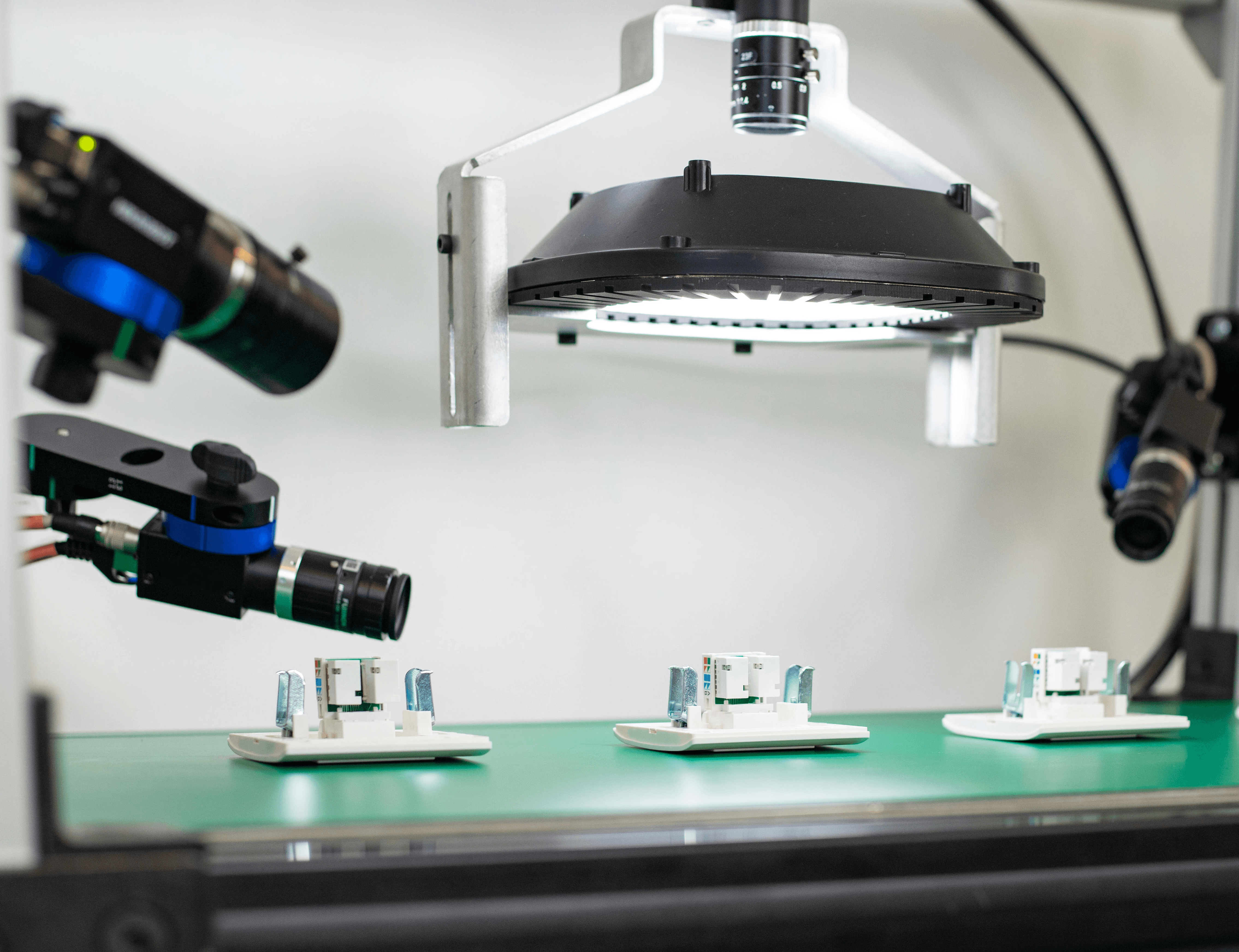
A large part of my activity consists of carrying out tests on our prospects' samples in order to evaluate the relevance of our technology for their applications. I also work to develop relations with integrators and machine manufacturers in order to build an ecosystem capable of offering our clients a complete solution, from inspection to line integration.
3. After these years at Scortex, in your opinion, what has allowed the company to become a pioneer of AI applied to quality control?
I think above all there is a mission that has driven us from the start: to give power back to manufacturers over their production quality and the associated costs.
This vision pushed us to develop tools that allow teams to better understand their processes, gain more control and make more informed decisions. This desire to bring concrete solutions to field problems has largely contributed to shaping the identity of Scortex.
4. A milestone, a unique experience to share?
There are many, but the moments that marked me the most are those where the whole company mobilized to push its own limits.
The most striking example is undoubtedly the strategic pivot that led us from our historical product to Spark. This transition required a huge amount of work, questioning and collective effort. In hindsight, this is a decisive step that has allowed Scortex to offer today a reference technology in the field of automated quality control.
5. On what has your expertise made the difference throughout your years of experience at Scortex? A challenge, a use case or a concrete moment to share?
My career has allowed me to intervene on many subjects, from the development of solutions to their implementation at customer sites.
If I had to retain one particular contribution, it would undoubtedly be my ability to bridge the gap between technical constraints, industrial needs and the possibilities offered by our technology. This global understanding often helps to transform a complex need into a concrete and workable solution in the field.
6. What are you most proud of in what you have built collectively?
I would simply say: Scortex.
It is both impressive and rewarding to see what the company has become after ten years of collective work. What was initially only an ambition held by a few people is today a company of around thirty employees, integrated into a major player in quality control.
Beyond the growth of the company, I am especially proud of all the people who have contributed to building this adventure over the years.
7. Looking ahead, how do you see AI applied to quality control evolving in the industry, and what is Scortex's place in this evolution?
AI is evolving today at a remarkable speed, with new advances appearing nearly every day. Rather than predicting precisely what tomorrow's AI will look like, I prefer to share my vision of the industry.
I think we are moving towards increasingly personalized production in order to meet consumer expectations. Factories will also become more efficient, capable of producing continuously while optimizing the use of resources to the maximum.
Scortex is fully part of this evolution. Automated inspection will no longer only be a way to detect defects: it will play a central role in the feedback loops allowing to adjust production parameters in real time in order to maintain a constant level of quality.
As for AI itself, it will be able to contribute to these goals at many levels. The possibilities are immense, and I am eager to see what the coming years have in store for us.
Nathanaël Hania, at the heart of the Scortex adventure since day one
Co-founder of Scortex, Nathanaël has seen the company evolve from a young tech startup to a recognized player in automated quality control. A decade marked by technical challenges, strategic pivots and the same ambition: to help manufacturers better control their quality.
1. When did you join Scortex and what is your role today?
I joined Scortex in 2016. I am one of the founders of the company.
Since the beginning of the adventure, I have held several positions, always linked to the technical aspects of the company. I participated in the design of the first products, their deployment at customer sites, and then their evolution over the years.
Today, I work mainly in pre-sales. My role consists of supporting future clients in evaluating their projects and helping them project themselves into using Spark on their production lines.
2. What does a typical day look like for you, and what are your key missions?
There isn't really a typical day, which is also the richness of the job.
A large part of my activity consists of carrying out tests on our prospects' samples in order to evaluate the relevance of our technology for their applications. I also work to develop relations with integrators and machine manufacturers in order to build an ecosystem capable of offering our clients a complete solution, from inspection to line integration.
3. After these years at Scortex, in your opinion, what has allowed the company to become a pioneer of AI applied to quality control?
I think above all there is a mission that has driven us from the start: to give power back to manufacturers over their production quality and the associated costs.
This vision pushed us to develop tools that allow teams to better understand their processes, gain more control and make more informed decisions. This desire to bring concrete solutions to field problems has largely contributed to shaping the identity of Scortex.
4. A milestone, a unique experience to share?
There are many, but the moments that marked me the most are those where the whole company mobilized to push its own limits.
The most striking example is undoubtedly the strategic pivot that led us from our historical product to Spark. This transition required a huge amount of work, questioning and collective effort. In hindsight, this is a decisive step that has allowed Scortex to offer today a reference technology in the field of automated quality control.
5. On what has your expertise made the difference throughout your years of experience at Scortex? A challenge, a use case or a concrete moment to share?
My career has allowed me to intervene on many subjects, from the development of solutions to their implementation at customer sites.
If I had to retain one particular contribution, it would undoubtedly be my ability to bridge the gap between technical constraints, industrial needs and the possibilities offered by our technology. This global understanding often helps to transform a complex need into a concrete and workable solution in the field.
6. What are you most proud of in what you have built collectively?
I would simply say: Scortex.
It is both impressive and rewarding to see what the company has become after ten years of collective work. What was initially only an ambition held by a few people is today a company of around thirty employees, integrated into a major player in quality control.
Beyond the growth of the company, I am especially proud of all the people who have contributed to building this adventure over the years.
7. Looking ahead, how do you see AI applied to quality control evolving in the industry, and what is Scortex's place in this evolution?
AI is evolving today at a remarkable speed, with new advances appearing nearly every day. Rather than predicting precisely what tomorrow's AI will look like, I prefer to share my vision of the industry.
I think we are moving towards increasingly personalized production in order to meet consumer expectations. Factories will also become more efficient, capable of producing continuously while optimizing the use of resources to the maximum.
Scortex is fully part of this evolution. Automated inspection will no longer only be a way to detect defects: it will play a central role in the feedback loops allowing to adjust production parameters in real time in order to maintain a constant level of quality.
As for AI itself, it will be able to contribute to these goals at many levels. The possibilities are immense, and I am eager to see what the coming years have in store for us.
Let's discuss your quality today.

Scortex team is happy to answer your questions.
Let's discuss your quality today.
Scortex team is happy to answer your questions.

Join our newsletter
Some visuals on this site were generated using AI.
Join our newsletter
Some visuals on this site were generated using AI.