
Hugues Poiget, 10 years of AI serving quality: a vision rooted in the field
With Scortex since 2017, Hugues Poiget is today its general manager. His career is part of the continuous development of the company, with a constant guiding thread: building an AI directly connected to industrial realities.
1. When did you join Scortex and what is your role today?
I joined Scortex in April 2017 to work on machine learning topics applied to images, notably the semantic segmentation of industrial parts.
I then moved towards the production release of machine learning models, then to technical management roles. Since 2024, I have held the position of general manager.
2. What does a typical day look like for you, and what are your key missions?
A successful day is one where I have been able to exchange both with clients and with the Scortex teams.
My missions mainly consist of carrying the product and technical vision, and ensuring its implementation with the teams. This involves aligning priorities and staying connected to the challenges on the ground.
3. After these nine years at Scortex, what enabled the company to become a pioneer in AI applied to quality control?
Several elements played a role.
First, approaching the subject through quality, and not solely through technology. This oriented developments towards concrete issues: defect acceptance criteria, variability of parts, production constraints.
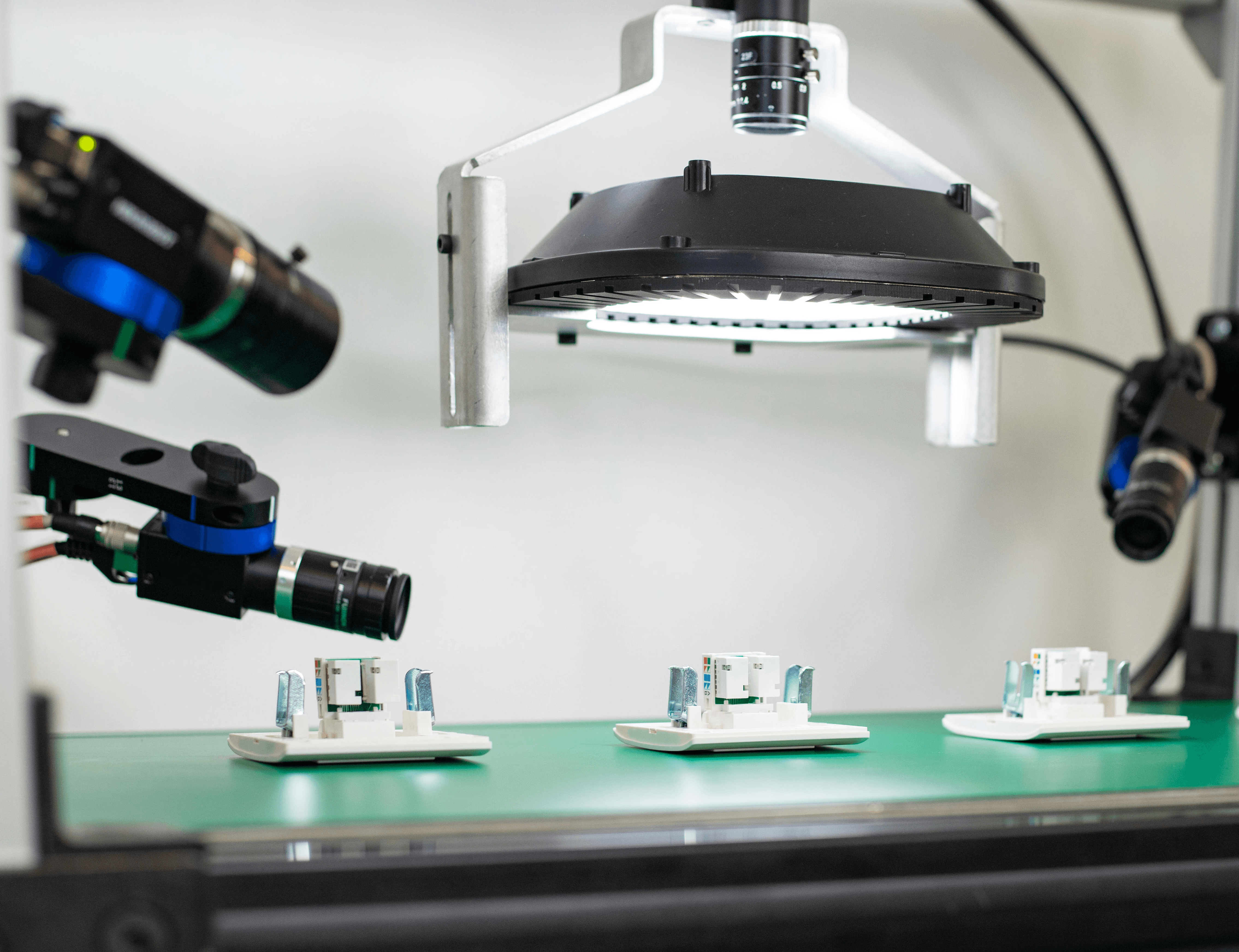
Secondly, the integration from the start of a hardware dimension, and not just software. Our solution, Spark, was conceived as a complete system, including AI, machine vision, software, data analysis, all at the service of quality control.
Finally, the choice to collect data directly from the production lines, as close as possible to real conditions of use. This made it possible to design models adapted to concrete industrial situations, with their constraints of cadence, variability, and robustness.
These three combined elements structured a coherent approach to Spark, our quality control solution with AI, aligned with the realities of the field.
4. A milestone, a unique experience to share?
In 2021, we automated the detection of cracks on stamped parts in motion, for a major French car manufacturer.
The context was demanding, with high cadences and significant reliability constraints. This type of project marked a milestone in our capacity to deploy solutions in industrial conditions.
5. Where has your expertise made a difference over the years?
Making machine learning understandable in a context of industrial quality was a key point.
Concretely, we brought our machine learning performance indicators, such as the area under the curve, closer to the tools used in factories, notably the gage R&R (repeatability and reproducibility). This allowed quality managers, users of Spark, to evaluate the system with their own benchmarks and integrate it more easily into their processes.
6. What are you most proud of in what you have built collectively?
To see Spark used routinely by our clients and to deploy more and more of our quality control systems in small and large factories.
This means that the solution integrates into existing industrial processes and contributes to their operation.
7. Looking to the future, how do you see AI applied to quality control evolving?
The vision is structured in three stages.
The first is the sorting of parts on the line.
The second consists of generating information to improve production.
The third aims to interconnect systems to create a complete loop.
Today, AI is used on the first point, and recent tools allow us to move forward on the second.
One of the challenges remains access to information. Systems still rely mainly on images, but in the future they will be able to integrate other sources, such as customer feedback or data from quality teams.
I am convinced that in the future, AI will not be limited to detecting defects. It will become a decision-support tool capable of linking quality, production, and field data to accelerate continuous improvement. It is in this convergence between inspection, analysis, and management that I see the future of quality control.
Hugues Poiget, 10 years of AI serving quality: a vision rooted in the field
With Scortex since 2017, Hugues Poiget is today its general manager. His career is part of the continuous development of the company, with a constant guiding thread: building an AI directly connected to industrial realities.
1. When did you join Scortex and what is your role today?
I joined Scortex in April 2017 to work on machine learning topics applied to images, notably the semantic segmentation of industrial parts.
I then moved towards the production release of machine learning models, then to technical management roles. Since 2024, I have held the position of general manager.
2. What does a typical day look like for you, and what are your key missions?
A successful day is one where I have been able to exchange both with clients and with the Scortex teams.
My missions mainly consist of carrying the product and technical vision, and ensuring its implementation with the teams. This involves aligning priorities and staying connected to the challenges on the ground.
3. After these nine years at Scortex, what enabled the company to become a pioneer in AI applied to quality control?
Several elements played a role.
First, approaching the subject through quality, and not solely through technology. This oriented developments towards concrete issues: defect acceptance criteria, variability of parts, production constraints.
Secondly, the integration from the start of a hardware dimension, and not just software. Our solution, Spark, was conceived as a complete system, including AI, machine vision, software, data analysis, all at the service of quality control.
Finally, the choice to collect data directly from the production lines, as close as possible to real conditions of use. This made it possible to design models adapted to concrete industrial situations, with their constraints of cadence, variability, and robustness.
These three combined elements structured a coherent approach to Spark, our quality control solution with AI, aligned with the realities of the field.
4. A milestone, a unique experience to share?
In 2021, we automated the detection of cracks on stamped parts in motion, for a major French car manufacturer.
The context was demanding, with high cadences and significant reliability constraints. This type of project marked a milestone in our capacity to deploy solutions in industrial conditions.
5. Where has your expertise made a difference over the years?
Making machine learning understandable in a context of industrial quality was a key point.
Concretely, we brought our machine learning performance indicators, such as the area under the curve, closer to the tools used in factories, notably the gage R&R (repeatability and reproducibility). This allowed quality managers, users of Spark, to evaluate the system with their own benchmarks and integrate it more easily into their processes.
6. What are you most proud of in what you have built collectively?
To see Spark used routinely by our clients and to deploy more and more of our quality control systems in small and large factories.
This means that the solution integrates into existing industrial processes and contributes to their operation.
7. Looking to the future, how do you see AI applied to quality control evolving?
The vision is structured in three stages.
The first is the sorting of parts on the line.
The second consists of generating information to improve production.
The third aims to interconnect systems to create a complete loop.
Today, AI is used on the first point, and recent tools allow us to move forward on the second.
One of the challenges remains access to information. Systems still rely mainly on images, but in the future they will be able to integrate other sources, such as customer feedback or data from quality teams.
I am convinced that in the future, AI will not be limited to detecting defects. It will become a decision-support tool capable of linking quality, production, and field data to accelerate continuous improvement. It is in this convergence between inspection, analysis, and management that I see the future of quality control.
Let's discuss your quality today.

Scortex team is happy to answer your questions.
Let's discuss your quality today.
Scortex team is happy to answer your questions.

Join our newsletter
Some visuals on this site were generated using AI.
Join our newsletter
Some visuals on this site were generated using AI.